Welcome to Incels.is - Involuntary Celibate Forum

Welcome! This is a forum for involuntary celibates: people who lack a significant other. Are you lonely and wish you had someone in your life? You're not alone! Join our forum and talk to people just like you.

JFL Genetic pollution

Lv99_BixNood

Lv99_BixNood

fascel
★★★★★
Joined
Nov 19, 2017
Posts
24,041
Online time
2d 18h

A popular example of this phenomenon is the gene flow between wolves and domesticated dogs. The New York Times cites, from the words of biologist Luigi Boitani, "Although wolves and dogs have always lived in close contact in Italy and have presumably mated in the past, the newly worrisome element, in Dr. Boitani's opinion, is the increasing disparity in numbers, which suggests that interbreeding will become fairly common. As a result, 'genetic pollution of the wolf gene pool might reach irreversible levels', he warned. 'By hybridization, dogs can easily absorb the wolf genes and destroy the wolf, as it is,' he said. The wolf might survive as a more doglike animal, better adapted to living close to people, he said, but it would not be 'what we today call a wolf.'"[1]

How is this not applicable to humans? :waitwhat:
 
No, white goy mix with noodlewhore, sheboon or spicleta it will be great for you !
 
I erenyeager was genetically polluted from the start and became inorganic
 
Dogs = racially disfigured mongrels

Wolves = Indo European
 
Indo europeans are closest to tajiks actually
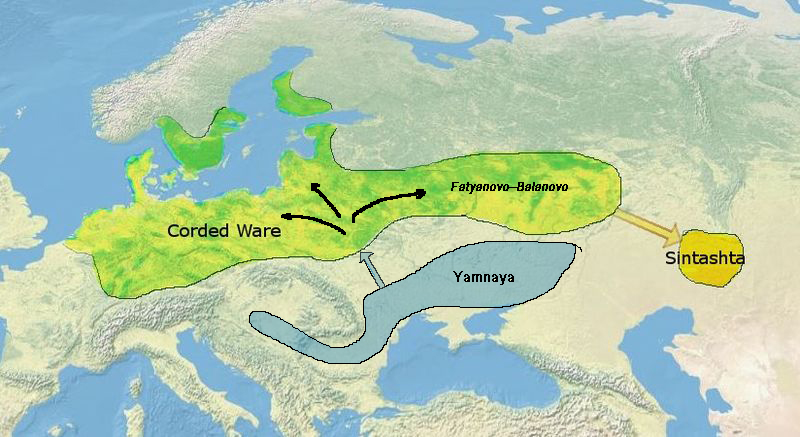
lol, ive noticed you like to pretend to be this forums genetic nerd freak, but no, tajiks are NOT the closest to indo europeans, dude, you dont even know who indo europeans were, you probably think they were yamnaya, learn the difference, anyways, this kickstarts my enlightening of thou, let us begin


How is this not applicable to humans? :waitwhat:

This is literally happening to dingoes as well in Australia, also farmers lobbied on building a massive fence to keep dingoes out of most of Australia. If you see a Dingo outside of the fence your legally allowed to shoot it cause it's considered a "wild dog" despite the fact their genome is slightly different. But once they interbreed with dogs enough we won't even be able to tell the difference.
 
Indo europeans are closest to tajiks actually
oh, it makes sense now, thats why youre entire dogma is so warped and mentally pseudo, you are a TURK!!

yikes, this is gonna be a fun one, just hurry up and explode at me already, so we can begin my teaching, ever since anthrogenica was taken off the internet, i was itching to play around with arrogant fools who dont know shit about archaeogenetic.
 
lol, ive noticed you like to pretend to be this forums genetic nerd freak, but no, tajiks are NOT the closest to indo europeans, dude, you dont even know who indo europeans were, you probably think they were yamnaya, learn the difference, anyways, this kickstarts my enlightening of thou, let us begin
"A 2022 study found that modern individuals from Southern Central Asia, especially Tajiks and Yaghnobis, display strong genetic continuity towards Iron Age Indo-Iranians"

 
oh, it makes sense now, thats why youre entire dogma is so warped and mentally pseudo, you are a TURK!!

yikes, this is gonna be a fun one, just hurry up and explode at me already, so we can begin my teaching, ever since anthrogenica was taken off the internet, i was itching to play around with arrogant fools who dont know shit about archaeogenetic.
1728806220412


JFL modern day tajik is east asian shifted
 
oh, it makes sense now, thats why youre entire dogma is so warped and mentally pseudo, you are a TURK!!

yikes, this is gonna be a fun one, just hurry up and explode at me already, so we can begin my teaching, ever since anthrogenica was taken off the internet, i was itching to play around with arrogant fools who dont know shit about archaeogenetic.

mtDNA of ancient central Asians​

An interesting new paper confirms the anthropological and archaeological picture of a westward spread of Caucasoids in Central Asia in early prehistoric times, followed by the spread of Mongoloids in the opposite direction during the 1st millennium BC. The Caucasoid-Mongoloid hybrid population resulting from these interactions is similar in terms of mtDNA with present-day Central Asians with some noted differences (e.g., presence of additional West Eurasian haplogroups). In the ancient samples, West Eurasian haplogroups H, HV, I, T*, T1, U*, U1, U5, U5a1 and W were represented:
  • HV sequences have matches in the Central Mediterranean region​
  • H sequences are split between the common Cambridge Reference Sequence (CRS) found in many populations, and two other sequences found in the Central Mediterranean and the Caucasus​
  • The I sequence is present in a modern Central Asian and also in individuals from the Caucasus​
  • The W sequence is widespread in West Eurasia​
  • T* sequences are widespread in Europe, the Near East and the Central Mediterranean region​
  • T1 is widespread in West Eurasia, but also found sporadically in East Eurasia​
  • The U1a sequences are found in Turks, Armenians and Caucasians​
  • The U5a sequence has been found in an Egyptian​
  • The U5a1 sequence is frequent in the Caucasus and present in Europe, while a different U5a1 was reported previously in Mongolia​
The East Eurasian haplogroups belong to A*, M*, M4 and G2:​
  • The M* sequence was observed in an Indian individual​
  • The M4 sequence has not been previously reported​
  • The G2 sequence is found in present-day China and Central Asia​
  • One A sequence is found in present-day Central Asians and Indians, while the other two have a motif found in a modern Chukchi​
Most (78%) of the sequences are of West Eurasian (Caucasoid) origin, but before the 7th c. BC, East Eurasian (Mongoloid) sequences are absent, although they could be present up to 20.6% (p<0.05).
Proc R Soc Lond B Biol Sci. 2004 May 7;271(1542):941-7.

Unravelling migrations in the steppe: mitochondrial DNA sequences from ancient central Asians.

Lalueza-Fox C et al.

This study helps to clarify the debate on the Western and Eastern genetic influences in Central Asia. Thirty-six skeletal remains from Kazakhstan (Central Asia), excavated from different sites dating between the fifteenth century BC to the fifth century AD, have been analysed for the hypervariable control region (HVR-I) and haplogroup diagnostic single nucleotide polymorphisms (SNPs) of the mitochondrial DNA genome. Standard authentication criteria for ancient DNA studies, including multiple extractions, cloning of PCR products and independent replication, have been followed. The distribution of east and west Eurasian lineages through time in the region is concordant with the available archaeological information: prior to the thirteenth-seventh century BC, all Kazakh samples belong to European lineages; while later an arrival of east Eurasian sequences that coexisted with the previous west Eurasian genetic substratum can be detected. The presence of an ancient genetic substratum of European origin in West Asia may be related to the discovery of ancient mummies with European features in Xinjiang and to the existence of an extinct Indo-European language, Tocharian. This study demonstrates the usefulness of the ancient DNA in unravelling complex patterns of past human migrations so as to help decipher the origin of present-day admixed populations.​
 

Similar threads

esdeathlover
Replies
5
Views
495
Krad
Krad
Last2025cel
Replies
66
Views
2K
TheSlavicCel
TheSlavicCel
DoomThreeKoala
Replies
12
Views
572
Lonly ghost
Lonly ghost
tired as fuck
Replies
15
Views
1K
Guatemalancel
Guatemalancel

Users who are viewing this thread

shape1
shape2
shape3
shape4
shape5
shape6
Back
Top