SaintManletLOL
Whitepilled & Bald
★★★
- Joined
- Jun 25, 2025
- Posts
- 271
- Online time
- 4m 16s
I can't believe that some people are still unaware of it
All it takes is a google search:
Jewish women have played a disproportionately influential role in all waves of modern feminism, with key figures like Betty Friedan, Gloria Steinem, and Bella Abzug leading the second wave in the U.S.. Beyond secular activism, Jewish feminists have profoundly transformed religious life by challenging patriarchy, advocating for women rabbis, and expanding ritual roles.
Jewish Women's Archive +3
Key Contributions to Feminism:
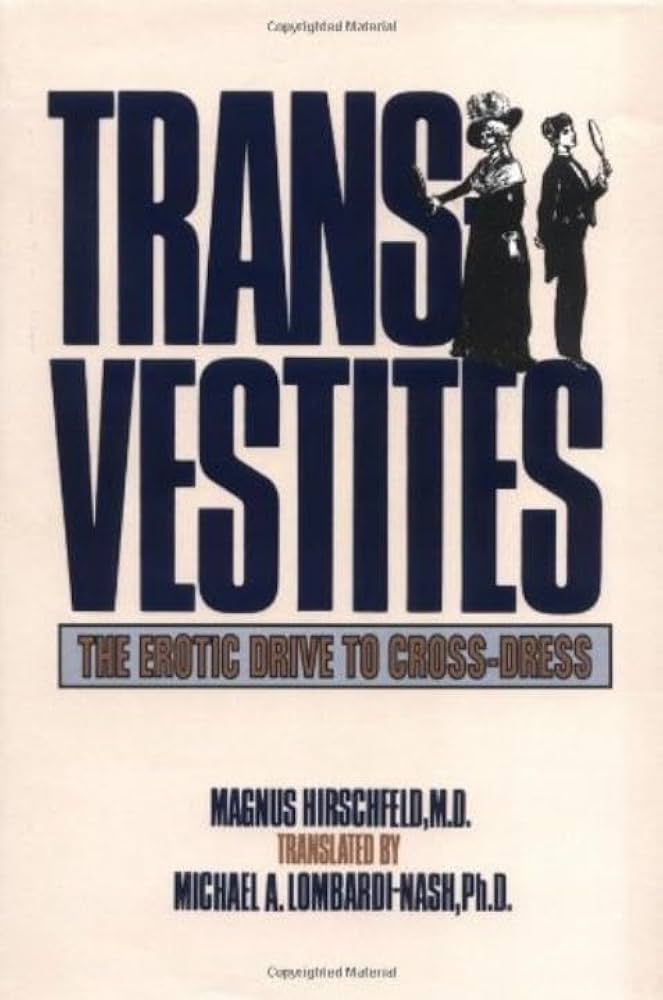
Also don't forget the jew Magnus Hirschfeld who created tranny ideology. The nazis thankfully destroyed his transgender institute and burned his degenerate books.
Magnus Hirschfeld (1868–1935) was a pioneering Jewish sexologist who laid the foundation for modern transgender identity and healthcare. He introduced the concept of "sexual intermediaries" to challenge binary gender, coined the term "transvestite" (in 1910) and "transsexualism" (in 1923), and founded the Institute for Sexual Science in 1919, which provided legal protection, counseling, and early gender-affirming surgeries.
Key contributions included:
All it takes is a google search:
Jewish women have played a disproportionately influential role in all waves of modern feminism, with key figures like Betty Friedan, Gloria Steinem, and Bella Abzug leading the second wave in the U.S.. Beyond secular activism, Jewish feminists have profoundly transformed religious life by challenging patriarchy, advocating for women rabbis, and expanding ritual roles.
Jewish Women's Archive +3
Key Contributions to Feminism:
- Second-Wave Leaders: Jewish women were pivotal in launching the women's liberation movement in the 1960s-70s, often comprising a large percentage of activists in radical feminist groups.
- Key Figures: Betty Friedan (The Feminine Mystique), Gloria Steinem (MS. Magazine), and Bella Abzug (U.S. Congresswoman) shaped mainstream feminist ideology.
- Jewish Feminism (Religious Reform): Activists and scholars, such as Judith Plaskow and Rachel Adler, challenged the exclusion of women from the minyan (prayer quorum), legal subordination in marriage/divorce, and lack of leadership roles, leading to the ordination of female rabbis and new, inclusive rituals.
- Historical Precedents: Early 20th-century figures like Bertha Pappenheim (founder of the Jüdischer Frauenbund,) in Germany and Henrietta Szold in the U.S./Israel paved the way for organizing for women's rights, social justice, and education.
- Intersectionality: Jewish feminists have navigated complex identities, often bridging secular feminist activism with efforts to change institutionalized Judaism, while tackling issues like anti-semitism within the broader women's movement.
- Radical Feminist Contribution: Many Jewish women in the 1960s-70s provided theoretical models for radical action, with up to two-thirds of some early women's liberation collectives being Jewish.
- Impact on Judaism: The movement has forced a reevaluation of traditional Jewish texts, the introduction of gender-neutral language for God, and the incorporation of female perspectives into Jewish theology.
Also don't forget the jew Magnus Hirschfeld who created tranny ideology. The nazis thankfully destroyed his transgender institute and burned his degenerate books.
Magnus Hirschfeld (1868–1935) was a pioneering Jewish sexologist who laid the foundation for modern transgender identity and healthcare. He introduced the concept of "sexual intermediaries" to challenge binary gender, coined the term "transvestite" (in 1910) and "transsexualism" (in 1923), and founded the Institute for Sexual Science in 1919, which provided legal protection, counseling, and early gender-affirming surgeries.
Key contributions included:
- Conceptualizing Gender Diversity: Hirschfeld challenged traditional binary definitions by arguing that sexual orientation and gender identity exist on a spectrum, which he termed "sexual intermediaries".
- Clinical Support and Surgeries: At his Institute for Sexual Science in Berlin, he provided a safe space for transgender individuals, offering hormonal therapies and some of the earliest recorded gender-affirming surgeries (e.g., for Dora Richter and Lili Elbe) in the 1920s and 30s.
- Legal Protections ("Transvestite Certificates"): Hirschfeld collaborated with the Berlin police to issue certificates to transgender people. These protected individuals from being arrested for "cross-dressing" or public nuisance, allowing them to live openly.
- Coining Terminology: In 1923, he coined the term transsexualism to describe individuals whose gender identity differed from their assigned sex at birth, a precursor to the modern understanding of transgender. Hirschfelds work was revolutionary in shifting the view of gender nonconformity from a criminal or mental pathology to a natural variation in human sexuality.




 Trvthnvke