The Notorious SLAV
Foid Oppression Denial Division Commander
★★★★★
- Joined
- Oct 30, 2022
- Posts
- 21,682
- Online time
- 3d 12h
Damn, who would have guessed . Is there any other sentiment that had been catching Ls as consistently as Slavpil denial had been?

Social Change and Marriage Patterns among Koryo Saram in Kazakhstan, 1937–1965*
That entire page is just epic.
In a single page, we get the stat that almost 80% of Koreans in USSR who intermarried were men, a very self-aware comparison with WMAF being much more common in the US and other countries than AMWF, a mention that, apparently, the biggest rockstar in Russian history was himself an AMWF hapa which I had no idea until finding this, and finally, a brief quote of another sociologist who studied this, who summed up ethnic intermarriage in the USSR, as having Central Asian men and Slavic European women as he main protagonists.
And the overall outmarriage numbers tell only half the story.
.
Oh, and of course, other ethnicities seem to have been doing better than Russians and Ukrainians, because of course they were.
Apparently it somewhat equalized over time, but seems that that was just in terms of composition, not overall numbers which still heavily favored men.
Thoughts?
. Is there any other sentiment that had been catching Ls as consistently as Slavpil denial had been?Social Change and Marriage Patterns among Koryo Saram in Kazakhstan, 1937–1965*
That entire page is just epic
.Korean men were significantly more likely than womento outmarry generally, in part because of their greater exposure to interethnic contact; a striking 79.1% of all interethnic marriages among the Korean community in our data set involved men. This general trend was apparent in all cities surveyed (Table 2), and stands in stark contrast to, e.g., the United States where exogamy among ethnic Koreans is much more common for women: according to census data from 2000, only 40.0% of marriages for U.S.-raised ethnic Korean women are endogamous, whereas the figure is 63.2% for men.
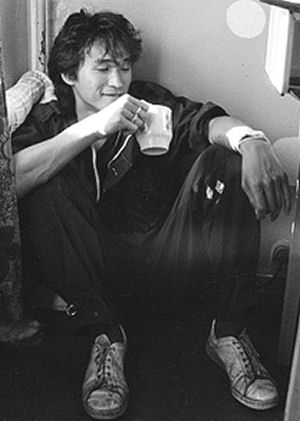
This difference also underscores the particularity of US popular media imagery that is often critiqued for its emasculation of Asian American masculinity. The contrast with the former Soviet Union is stark. One might also note here, for example, that the godfather of rock music in the ex-USSR and an icon of youthful male rebellion (such as it was), was Viktor Tsoi, the offspring of a marriage between Robert Tsoi, a Koryo saram engineer born in Kyzyl-Orda in 1938, and an ethnic Russian schoolteacher.
Ethnic intermarriage in the former Soviet Union had its own particular cast. As Susukolov observed, “the indigenous men of Central Asia and the Caucasus often intermarried. Women from the European republics of the USSR, however, were no less likely and sometimes more likely than men to enter into mixed marriages.
In a single page, we get the stat that almost 80% of Koreans in USSR who intermarried were men, a very self-aware comparison with WMAF being much more common in the US and other countries than AMWF, a mention that, apparently, the biggest rockstar in Russian history was himself an AMWF hapa which I had no idea until finding this, and finally, a brief quote of another sociologist who studied this, who summed up ethnic intermarriage in the USSR, as having Central Asian men and Slavic European women as he main protagonists
.And the overall outmarriage numbers tell only half the story.
More than 100 ethnic groups, of whom Russians were the most numerous, were living in Kazakhstan by the 1950s. As one might expect, and as we have already indicated, the directionality of mixed marriages in Kazakhstan was hardly neutral with respect to the diverse ethnic mosaic that composed the population.
While Korean males disproportionately married Russian women, over the period under discussion the range of ethnic groups with which Korean women intermarried was more varied. In the four cities sampled between 1937 and 1965 (Table 5), interethnic matches occur most frequently with Russians (Korean men: 70.0%; Korean women: 45.6%) and second most frequently with Ukrainians (Korean men: 11.4%; Korean women: 5.3%).
80%+ of outmarried Korean men married Russian or Ukrainian women, while only 50%+ of outmarried Korean women did, meaning that, as men outmarried much more, there were maybe up to 8 times as many Korean Soviet men married to ethnic Russians and Ukrainians then Korean women, taking into account that the data here is rather incomplete. Meanwhile, the opposite is true for Kazakh-Korean marriages, and despite Korean men outmarrying at such higher rates, their female counterparts were so much more likely to marry a Kazakh that there seem to have been more Kazakh male-Korean female marriages than vice versaIntermarriage with Kazakhs took third place overall (9.0%). Here, however, the directionality of intermarriage is strikingly reversed: only 5.3% of exogamous marriages for Korean men were with Kazakh women, but 26.3% of Korean women’s interethnic marriages were with Kazakh men. If outmarrying, Korean women were thus approximately five times more likely to partner with Kazakhs than Korean men were;
.Oh, and of course, other ethnicities seem to have been doing better than Russians and Ukrainians, because of course they were
.Other examples of intermarriages are filled out by a miscellany of ethnic groups: Volga Tatars at 4.0% of the total (Korean men: 5.3%; Korean women: 1.8), Germans at 1.4% (men: 1.6%; women: 1.8%), and Belarusians at 1.1% (men: 1.1%; women: 1.8%). Marriages to a smattering of other ethnicities including Jews, Buryats, Mongols, Chinese, and Bashkirs comprised 9.4% of the total (men: 7.9%; women: 19.3%).
Apparently it somewhat equalized over time, but seems that that was just in terms of composition, not overall numbers which still heavily favored men.
In the 1960s, with the expansion of bilingualism and the higher educational and socioeconomic status of Koreans, interethnic marriages continued to grow more frequent. In the first half of the decade, exogenous marriages of Korean men appeared in the following order: Russian (76.9%), Kazakhs (11.5%), and then Ukrainians, Germans, and Chinese (3.8% apiece), whereas for Korean women intermarriages were now occurring with Russians (70.0%), which shows striking growth. One might surmise that this has to do with Korean women’s increasing access to education and employment outside the home.
Intermarriage with Russians was followed by marriages with Kazakhs (20.0%) and other ethnicities in small numbers (Mongols, Koryak, etc.). Here what is most notable is simply the colorful, highly multicultural mosaic of society in Kazakhstan that had already developed a half-century ago, long before the term multiculturalismcame to be bandied about in Europe or the United States, let alone South Korea itself.
Thoughts
?