zephyr
UK Wizardcel
★★★★★
- Joined
- Jul 22, 2021
- Posts
- 4,403
- Online time
- 2d 2h

Cues to mental health from men’s facial appearance
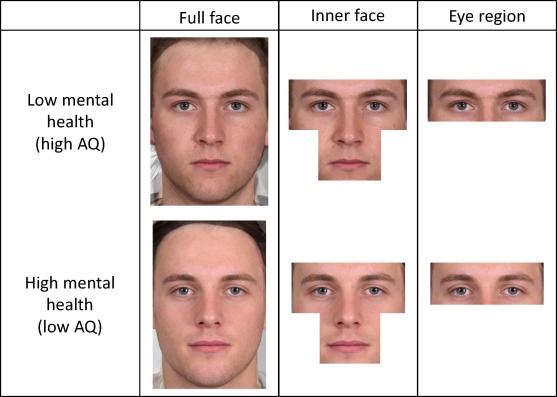
Previous work shows that mental health can be evident from neutral facial appearance. We assessed the accuracy of mental health perceptions from facia…
Therefore, accurate identification of neuroticism implies that observers might be able to assess, to some degree, mental health status on the basis of mere facial appearance. Indeed, even when facial images are taken under controlled conditions, accurate mental health discriminations have been found. Photographic composites of men and women with high and low scores in the dark triad (Machiavellianism, narcissism, and psychopathy) could be accurately identified (Holtzman, 2011). Similar results have been found with depressive symptoms, and furthermore, observers negatively evaluated the high-depression images, for example mistakenly identifying them as less friendly and agreeable (Scott, Kramer, Jones, & Ward, 2013).
To begin, people with attractive faces are rated more positively than unattractive people for diverse social traits (Eagly et al., 1991, Miller, 1970), including mental health (Martin, Friedmeyer, & Moore, 1977). Indeed, attractiveness and mental health may be correlated. Psychiatric patients tend to be less attractive than controls (Farina et al., 1977, Napoleon et al., 1980); and facial attractiveness may affect psychological well-being and risk of depression (Datta Gupta, Etcoff, & Jaeger, 2016).
Mental health problems could cause reduced attractiveness (e.g., sleep deprivation, Axelsson et al., 2010).
Alternatively, by an interactional model such as Coyne (1976), repeated negative reactions from observers could themselves cause mental health issues. By such an account, attractive people might find themselves in better psychological situations, owing to the more favorable responses of others (Burns and Farina, 1992, O’Grady, 1982).
Perhaps most notably, the extreme male brain theory of Baron-Cohen (2002) links pre-natal testosterone exposure to the high autistic quotient (AQ) scores associated with mechanistic as opposed to empathetic thinking.
Other mental health disorders also show some degree of sex-specificity, for example, women tend to show higher rates of depression (Kessler, 2003), while men seem to be more at risk from schizophrenia (Aleman, Kahn, & Selten, 2003).
Masculinity is also related to the attractiveness of men's faces, although in a nonlinear way. Low levels of facial masculinity are not sexually attractive, and very high levels are associated with aggression and danger (Johnston, 2006). The most attractive men's faces show an intermediate level of dimorphism, which varies somewhat between studies, from somewhat more feminine than the male average (e.g., Perrett et al., 1998) to somewhat more masculine (e.g., DeBruine et al., 2006).
For example, personality disorders of all types are associated with significantly increased risk of heart disease (Moran et al., 2007).