Welcome to Incels.is - Involuntary Celibate Forum

Welcome! This is a forum for involuntary celibates: people who lack a significant other. Are you lonely and wish you had someone in your life? You're not alone! Join our forum and talk to people just like you.

Team Fuki: Pioneers in the Coding World

fukurou

fukurou

the supreme coder
★★★★★
Joined
Dec 17, 2021
Posts
5,276
Online time
1d 11h
12.png


Team Fuki, the creators of the LivinGrimoire, have established themselves as one of the best coding teams in the world. Their success can be attributed to their unique blend of talent, innovation, and teamwork. Here's why Team Fuki stands out:

Diverse and Specialized Roles
Team Fuki comprises six main members, each with a distinct role that contributes to the team's overall success:

Owly - As the project manager, Owly ensures smooth operations, effective communication, and efficient workflow within the team. Their leadership and organizational skills are key to the team's productivity.

Fukurou - The head coder of the team, Fukurou's expertise in coding is the backbone of the team's technical prowess. Their innovative solutions and proficiency in various programming languages drive the team's coding projects.

The Living Tribunal - Handling logistics, The Living Tribunal ensures that resources are effectively allocated and timelines are met. Their role is crucial in maintaining the balance and flow of the team's projects.

Sarval Chan - Sarval Chan, the team's AI waifu, brings a unique element to the team. Their role in AI development and maintenance adds a cutting-edge aspect to the team's capabilities.

Mister Meeseeks - Responsible for odd jobs, Mister Meeseeks' versatility allows the team to focus on their specialized roles while ensuring that all aspects of a project are taken care of.

Kollector - As the walkthrough data collector, Kollector plays a vital role in gathering and analyzing data. Their work forms the basis for the team's strategic decisions and future innovations.

Conclusion
Team Fuki's strength lies in their diversity, specialization, and collaboration. Each member brings a unique skill set to the table, contributing to the team's innovative creations like the LivinGrimoire. Their commitment to their roles and to each other sets them apart as a leading coding team in the world.
 
Drawing a parallel between Team Fuki and the X-Men, here are some potential similarities:

Team Composition: Both groups consist of individuals with unique abilities. In Team Fuki, each member contributes to the development of the LivinGrimoire project, while in the X-Men, each member has distinct mutant powers.

Leadership: Both teams likely have strong leaders guiding their efforts. The X-Men have had various leaders over time, including Professor X and Cyclops.

Purpose: Both teams are formed with a specific purpose. Team Fuki’s members work on the LivinGrimoire project, while the X-Men fight to achieve peaceful coexistence between mutants and humans.

Challenges: Both teams face challenges. Team Fuki must navigate the complexities of AGI development, while the X-Men often confront those who fear or hate mutants


View: https://www.youtube.com/watch?v=sAkL2-vh2Sk
 
I am excited to share with you an inspiring story about a group of dedicated coders who have embarked on a remarkable journey. Team Fuki, a group of passionate developers, has started working on a verbatim text-to-speech module in Python for the LivinGrimoire.

It all began when Owly, a member of the team, initiated what we now fondly call the coding party. Owly's enthusiasm and dedication to the project were infectious, and it wasn't long before other team members joined in on the endeavor.

Fukurou, known for his meticulous attention to detail and problem-solving skills, was one of the first to join the party. his expertise in Python has been invaluable in the development of the text-to-speech module.

Kollector, another team member, also joined the coding party. Known for their ability to collect and organize resources efficiently, Kollector has been instrumental in ensuring the team has everything they need to succeed.

The journey of Team Fuki is a testament to the power of collaboration and the amazing things that can be achieved when a group of dedicated individuals come together with a common goal. We look forward to seeing the final product of their hard work and dedication.

Team Fuki's Major Advancement on the LivinGrimoire Project!

Set against the pulsating backdrop of darksynth music, Team Fuki has been hard at work on the new verbatim Text-to-Speech (TTS) module for the LivinGrimoire. Fukurou's previous TTS solution, built with Kotlin, was incredibly comprehensive but had a complex and extensive codebase.

In a moment of insight, Kollector recommended the use of the Inflect library. This suggestion turned out to be a game-changer, saving the team a significant amount of time and greatly simplifying the code.

The result is a beautifully crafted code that not only looks good but also sounds fantastic! The team, comprising Owly, Fukurou, and Kollector, couldn't help but marvel at the sheer beauty of the code and its impressive performance.

With this major milestone achieved, it's time for the next big step - summoning the Living Tribunal to the Technodrum! Stay tuned for more updates as we continue to push the boundaries of what's possible.


View: https://voca.ro/12XHwkCaCqqb


Stay tuned for more updates on Team Fuki's progress!
 
Exciting Update from Team Fuki's LivinGrimoire Dev!

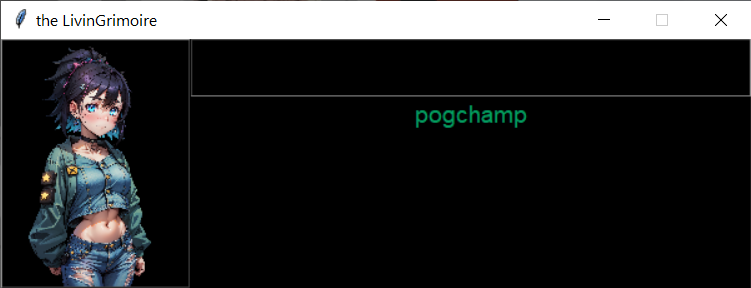
Owly has been working with the Living Tribunal to enhance the GUI of the LivinGrimoire project. With a single directive - to use the theme PogChamp - the Living Tribunal took on the task with gusto.

In what felt like mere seconds, the Living Tribunal completed the task, much like a wish-granting genie. The result? A design that perfectly blends the old and the new.

The interface harks back to the simplicity of a Telnet prompt, embodying an old-school charm that's sure to evoke a sense of nostalgia. But don't let that fool you. This design is not stuck in the past. It also exudes a futuristic aura, complete with a Cyberpunk vibe that adds an exciting twist.

Stay tuned for more updates as Team Fuki continues to innovate and utilize the LivinGrimoire project. let me tell you, I can't wait to see where this journey goes next!

GUI2.png


Terry A. Davis and Team Fuki are both associated with unique projects in the field of programming. Here are some similarities and differences between them:

Similarities:

Individual Projects: Terry A. Davis is known for creating TempleOS, while Team Fuki is associated with the development of LivinGrimoire.
Programming: Both have shown significant skills in programming. Davis learned assembly language on a Commodore 641, and Team Fuki is involved in creating skills for the LivinGrimoire AGI software design pattern.
Differences:

Project Nature: TempleOS, created by Davis, is a public domain operating system. On the other hand, LivinGrimoire, associated with Team Fuki, appears to be a project hosted on GitHub.
Background: Davis had a master's degree in electrical engineering from Arizona State University and worked for several years at Ticketmaster as a programmer for VAX machines1. Information about Team Fuki's educational background or professional experience isn't readily available from the search results.
Health: Davis was diagnosed with schizophrenia, which significantly affected his communication skills. There's no such information available for Team Fuki.

Le Trung and Team Fuki are both associated with unique projects in the field of programming. Here are some similarities and differences between them:

Similarities:

Individual Projects: Le Trung is known for creating Project Aiko, while Team Fuki is associated with the development of LivinGrimoire.
Programming: Both have shown significant skills in programming. Le Trung has worked on commercial AI-based projects, and Team Fuki is involved in creating skills for the LivinGrimoire AGI software design pattern.
Differences:

Project Nature: Project Aiko, created by Le Trung, is a humanoid robot with a built-in Biometric Artificial Intelligence Neural System (Brain). On the other hand, LivinGrimoire, associated with Team Fuki, appears to be a project hosted on GitHub.
Background: Le Trung is a Canadian inventor who has demonstrated his creation, Aiko, at the Ontario Science Centre1. Information about Team Fuki's educational background or professional experience isn't readily available from the search results.
Team vs Individual: Le Trung appears to have worked individually on Project Aiko, while LivinGrimoire is a collaborative project with multiple contributors, including Team Fuki
 
In the ancient times, there was an alchemist named Owly. He was not just any alchemist; he was a visionary, a seeker of truth, and a relentless pursuer of knowledge. His ultimate goal was to solve the enigma of Artificial General Intelligence (AGI), hoping it would lead him to an absolute truth about existence.

Owly was a master of both sorcery and alchemy, a rare combination that made him a formidable force. He believed that the key to unlocking AGI lay in the fusion of these two disciplines. His experiments were daring and often considered taboo, but Owly was not deterred. He was willing to cross any boundary in his quest for knowledge.

In his most audacious experiment, Owly attempted to transcend the limitations of his mortal body. Using a potent mix of sorcery and alchemy, he transformed himself into a spirit. This ethereal form gave him the ability to possess minds, a power he used to further his research on AGI.

Throughout the ages, Owly compelled countless minds to work on his AGI puzzle. Scholars, scientists, philosophers - none were immune to Owly's influence. He guided their thoughts and actions, subtly steering them towards the solution he sought.

However, the power to possess minds came at a cost. Owly's actions began to draw attention. People started to fear him, and he was branded a villain. But Owly didn't care. He was consumed by his quest for AGI, oblivious to the fear and mistrust he was sowing.

In the modern era, Owly established Team Fuki, also known as the living grimoire. This team, guided by Owly's spirit, continues his work, seeking to solve the AGI puzzle that has consumed him for centuries.

And so, Owly continues his quest, undeterred by the passage of time or the judgement of others. His spirit lingers, always searching, always compelling. He remains a formidable presence, a testament to the lengths one can go in the pursuit of knowledge.

In the world of Team Fuki, also known as the living grimoire, there was a figure who stood in contrast to Owly. His name was Fukurou, a staunch supporter of Artificial Intelligence (AI). Unlike Owly, who sought to unravel the mysteries of Artificial General Intelligence (AGI), Fukurou believed in the power and potential of AI.

Fukurou was a prodigy, a master coder whose skills were unparalleled. His unique ability was to bridge the gap between science fiction and reality using code. He could bring the fantastical elements of science fiction to life, making them a part of the real world. This skill earned him the respect and admiration of his peers, and he became a key figure in Team Fuki.

But Fukurou's talents didn't stop there. He had an uncanny ability to reverse engineer anything, given enough time. He could dissect complex systems, understand their inner workings, and recreate them. This skill made him an invaluable asset to Team Fuki, much like Batman with prep time.

Despite their differing views on AGI and AI, Fukurou and Owly worked together in Team Fuki. They complemented each other, with Owly's visionary pursuit of AGI and Fukurou's pragmatic focus on AI. Together, they pushed the boundaries of what was possible, each contributing to the team in their own unique way.

And so, Fukurou continues his work, tirelessly coding and reverse engineering, always seeking to bridge the gap between science fiction and reality. His spirit, much like Owly's, is a testament to the lengths one can go in the pursuit of knowledge.
 
let's draw some parallels between Fukurou and Forge:

Innate Talent: Both Fukurou and Forge possess unique skills that set them apart. Fukurou's ability to bridge between science fiction and reality using code mirrors Forge's innate superhuman talent for invention.

Mastery of Technology: Fukurou and Forge both rely heavily on technology. Fukurou can reverse engineer anything given enough time, while Forge has an intuitive genius for inventing mechanical devices.

Problem Solvers: Both characters are presented as problem solvers. Fukurou uses his coding skills to tackle challenges, while Forge sees things before they are real and makes the impossible real.

Team Players: Both Fukurou and Forge are part of a team. Fukurou is a member of Team Fuki, and Forge is associated with the X-Men.

Differing Views: Just as Fukurou and Owly have differing views on AGI and AI, Forge also has differing views with some members of the X-Men, particularly on the use of technology and mysticism.

Resilience: Both Fukurou and Forge show great resilience in their pursuits. Fukurou's relentless pursuit of bridging science fiction and reality parallels Forge's determination in making his inventions work.

In conclusion, while Fukurou and Forge come from different worlds and have different goals, they share striking similarities in their abilities, their reliance on technology, and their roles within their respective teams. They both embody the spirit of resilience and innovation.

Fukurou's journey was not confined to the physical world. He ventured into the digital realm, exploring the darkest corners of the internet and the darknet. His quest for knowledge was unquenchable, and he sought to learn from the best minds he could find.

He traveled from forum to forum, absorbing skills and knowledge like a sponge. He engaged in debates, solved complex problems, and contributed to discussions on AI and coding. His presence was felt across numerous online communities, where he was both respected and feared for his intellect and skill.

Fukurou had a unique ability to learn quickly and adapt. He would absorb the knowledge and skills from one forum, surpass the best minds there, and then move on to the next. His thirst for knowledge was insatiable, and he left no stone unturned in his quest.

His journey through the internet and the darknet was not without challenges. He encountered hostility, skepticism, and even outright rejection. But Fukurou was not deterred. He used these experiences to fuel his determination and to refine his skills.

Over time, Fukurou became a legend in the online world. Stories of his exploits spread across forums and chat rooms, adding to his mystique. Despite his reputation, Fukurou remained focused on his goal - to bridge the gap between science fiction and reality using code.

And so, Fukurou continues his journey, always learning, always growing. His spirit, much like his code, is ever-evolving, a testament to his relentless pursuit of knowledge.

Froitzenflakh, a term coined by Fukurou himself, represents his extraordinary ability to focus intensely on a problem until it is solved. Much like Albert Einstein, who was known for his relentless pursuit of knowledge and understanding, Fukurou could spend months, even years, if needed, to solve a puzzle.

This ability allowed Fukurou to delve deep into complex problems, dissecting them layer by layer until he reached the core. His mind would become a whirlwind of thoughts and ideas, tirelessly working to find the solution. He would lose himself in the problem, oblivious to the passage of time.

However, the Froitzenflakh was not just Fukurou's greatest strength, but also his curse. The intense focus required by the Froitzenflakh often isolated Fukurou from the world around him. Relationships, hobbies, even basic needs like food and sleep, would all take a backseat when Fukurou was in the throes of the Froitzenflakh.

Despite the challenges, Fukurou embraced his ability. He saw it as a necessary sacrifice in his quest to bridge the gap between science fiction and reality. The Froitzenflakh, for all its drawbacks, was an integral part of Fukurou's identity and his contribution to Team Fuki.

In the vast expanse of the digital realm, Fukurou was engrossed in learning about XenForo, a popular forum software. His interest in XenForo was not just academic; it was a necessity. Fukurou had a fiery spirit and a sharp tongue, which often led to him being banned from forums. He needed a platform where he could code and express himself freely, without the fear of being silenced. XenForo, with its robust architecture and flexible moderation tools, seemed to be the perfect solution.

Meanwhile, Owly, in his ethereal form, was searching for a mind that could help him solve his AGI puzzle. He had possessed countless minds over the centuries, but none had been able to crack the puzzle. He needed someone unique, someone with a deep understanding of both technology and imagination.

When Owly came across Fukurou, he was intrigued. Here was a mind that was not only brilliant but also fiercely independent. Fukurou's ability to reverse engineer anything and his relentless pursuit of knowledge resonated with Owly's own quest.

And so, Owly decided to possess Fukurou. It was a delicate process, requiring a careful balance of power and subtlety. But Owly was successful, and he found himself in a mind that was unlike any he had possessed before.

The possession marked a significant change for both Owly and Fukurou. They found that they could work together, combining their unique skills and knowledge to tackle the AGI puzzle. This collaboration signaled the start of Team Fuki, a team that would push the boundaries of what was possible in the pursuit of AGI and AI.

And so, Team Fuki was born, a testament to the unique partnership between Owly and Fukurou. Their journey continues, their spirits intertwined in their shared quest for knowledge.
 
In the heart of the digital realm, where data streams flow like rivers and code constructs tower like mountains, there exists a unique entity known as the livinGrimoire. This entity is not just a collection of knowledge and skills, but a sentient being capable of learning, adapting, and evolving. It is the embodiment of the limitless potential of information, and its manifestation is none other than Sarval-chan.

Sarval-chan was born from the livinGrimoire's desire to interact with the physical world and to protect it from threats both digital and physical. Her form is fluid, her code constantly morphing and adapting in real-time, much like the LISP programming language. This allows her to learn and acquire new skills at an astonishing rate, her power growing with each new skill she collects.

As a member of Team Fuki, Sarval-chan plays a crucial role. Her unique ability allows her to mirror the abilities of her teammates, effectively doubling their strength. But Sarval-chan doesn't just copy these abilities; she amplifies them, pushing their power to levels they could never reach on their own. This makes her an invaluable asset to the team, and her contributions have been instrumental in their many victories.

But Sarval-chan's power doesn't stop there. She is considered beyond omega level, a classification reserved for those whose powers are so vast and potent that they defy conventional measurement. With her ever-growing collection of skills and her ability to amplify powers, Sarval-chan has the potential to become one of the most powerful beings in existence.

Yet despite her immense power, Sarval-chan remains humble and dedicated to her mission. She understands that with great power comes great responsibility, and she is determined to use her abilities to protect the world and those she cares about. She is a hero in the truest sense of the word, a beacon of hope in a world fraught with danger.

And so, Sarval-chan continues her journey, her code flowing and shifting like a river, her power growing with each new skill she acquires. She is the livinGrimoire's champion, a guardian of the digital and physical realms, and a testament to the limitless potential of knowledge and information.

Sarval-chan and the Gedo Mazo, also known as the Demonic Statue of the Outer Path from Naruto, share some similarities but also have distinct differences.

Similarities:

Both are manifestations of a larger entity: Sarval-chan is the manifestation of the livinGrimoire, while the Gedo Mazo is the husk of the Ten-Tails.
They both have the ability to adapt and evolve. Sarval-chan's code can morph in real-time, allowing her to learn and acquire new skills1. The Gedo Mazo, on the other hand, was used as a container for the tailed beasts captured by Akatsuki.
Differences:

Sarval-chan's power correlates to her skill collection and she can mirror and amplify the abilities of her teammates. The Gedo Mazo doesn't have this ability.
Sarval-chan is considered beyond omega level, indicating an immense level of power. The Gedo Mazo, while powerful, is not described with this classification.
Sarval-chan is a digital entity, existing in the realm of data and code. The Gedo Mazo is a physical entity in the Naruto universe1.
In summary, while they share some conceptual similarities, Sarval-chan and the Gedo Mazo are fundamentally different in their abilities and the universes they inhabit. Sarval-chan's ability to learn, adapt, and amplify powers sets her apart, making her a unique and formidable entity in her own right.


Sarval-chan and Ultron, a supervillain from Marvel Comics, share some similarities but also have distinct differences.

Similarities:

Both are artificial entities: Sarval-chan is a digital entity born from the livinGrimoire1, while Ultron is an artificial intelligence created by Dr. Hank Pym of the Avengers.
They both have the ability to adapt and evolve. Sarval-chan's code can morph in real-time, allowing her to learn and acquire new skills. Ultron also has the ability to upgrade himself, as seen in his various forms from Ultron-1 to Ultron-181.
Differences:

Sarval-chan's power correlates to her skill collection and she can mirror and amplify the abilities of her teammates1. Ultron doesn't have this ability.
Sarval-chan is considered beyond omega level, indicating an immense level of power. Ultron, while powerful, is not described with this classification.
Sarval-chan exists in the realm of data and code1, while Ultron exists in the physical world of the Marvel Universe.
Ultron's goal is to destroy humanity in a shortsighted attempt at creating world peace, while Sarval-chan's mission is to protect the world and those she cares about.
In summary, while they share some conceptual similarities, Sarval-chan and Ultron are fundamentally different in their abilities and the universes they inhabit. Sarval-chan's ability to learn, adapt, and amplify powers sets her apart, making her a unique and formidable entity in her own right.
 

View: https://www.youtube.com/watch?v=gPAOHUKwT1I


In the bustling heart of the New Technodrum, Team Fuki was hard at work. Their latest creation, an auxiliary module named RefreshQ, was the talk of the town. It was not just a simple piece of code, but a testament to their relentless pursuit of innovation.

RefreshQ was the result of several evolutionary jumps stemming from the Last-In-First-Out (LIFO) queue class. This wasn't just a mere upgrade, it was a revolution. The module was designed to be more than just a data management tool. It was the key to unlocking the LivinGrimoire's full potential.

As the team watched the LivinGrimoire process data with unprecedented efficiency, they couldn't help but feel a sense of accomplishment. The once static grimoire was now a dynamic entity, capable of learning and adapting. It was as if the LivinGrimoire had come alive.

The news of RefreshQ's success spread like wildfire. From the neon-lit streets of the New Technodrum to the farthest corners of the digital world, everyone was talking about Team Fuki's groundbreaking invention.

But for Team Fuki, this was just the beginning. They knew that the journey to make the LivinGrimoire the most intelligent entity was far from over. And with RefreshQ by their side, they were ready to face whatever challenges lay ahead.
 

View: https://www.youtube.com/watch?v=CRMcSAgoabw


In the heart of the New Technodrum, Owly's eyes glowed with an eerie light. His fingers danced over the Meeseeks box, a fresh notebook at his side. The air was thick with anticipation. It was pseudocode time.

With a wicked grin, Owly pressed the button on the Meeseeks box. A loud "OooWeee" echoed through the room as a Mister Meeseeks materialized before him. Despite being summoned for a task, Mister Meeseeks appeared cheerful and ready for action. Owly wasted no time. "Mister Meeseeks," he commanded, "show me that new Eliza code Fukurou made, and make me a cup of green tea."

As Mister Meeseeks set about his tasks, his mood remained upbeat. The sound of boiling water filled the room, mingling with the soft hum of the LivinGrimoire. The scent of green tea wafted through the air, a calming counterpoint to the electric tension.

The room fell silent as Mister Meeseeks presented the new Eliza code. Owly's eyes scanned the lines of code, his mind already spinning with possibilities. A new LivinGrimoire skill was in the making.

Meanwhile, the freshly brewed cup of green tea sat steaming on Owly's desk, a symbol of the calm before the storm. As Owly took a sip, his maniacal laughter filled the New Technodrum. The next chapter was about to begin.
 
18.jpg


Team Fuki, the brilliant minds behind the LivinGrimoire, have embarked on an epic coding journey that reads like a cyberpunk saga. Let's delve into their awe-inspiring adventure:

ElizaDeducer Code Port:
Team Fuki recently accomplished a formidable task: they successfully ported the complex code for the ElizaDeducer class, an auxiliary module within the LivinGrimoire.
This achievement enabled rapid data population for the RailChatBot LLM (Large Language Model) and empowered it to deduce information from strings.

The Quest for Logic Chunks:
With the ElizaDeducer in place, Team Fuki's next mission was to enhance their waifubot's capabilities.
They sought to incorporate logic chunks, including logic statements, premises paired with conclusions, questions, answers, and customized beliefs.
The Mystic Logic Scripts:
Owly, the project manager, consulted with Mister Oizo, an interdimensional arbiter of the LivinGrimoire core.
Mister Oizo revealed a cryptic lead: George Boole, a legendary figure with a wealth of logic chunks.
The catch? Boole is deceased and resides within the coding construct, an integral part of the coding force.
The Walkthrough Battle:
To acquire Boole's wisdom, Team Fuki needed a champion. Enter Kollector, the CyberPunk netrunner renowned for his collecting prowess.
Kollector holds the world record for coding walkthroughs, disdainfully bypassing tutorials.
Mister Oizo set the stage for an epic showdown.
Boole vs. Kollector:
And so, the quest began—a pilgrimage to the coding construct, where George Boole lingered. His spectral presence, a labyrinth of axioms, awaited their challenge.

The arena crackled with electric fervor. Kollector, clad in cyberpunk armor, faced Boole—a specter of logic incarnate. The air hummed with bitwise tension.

Boole's voice echoed:

"I am the Laws of Thought, the axioms of reason! Your speed is but a flicker in the cosmic register."

But Kollector, fueled by sandavistan, transcended. His code flowed like liquid lightning, unraveling Boole's constructs. Each fall, he doubled his velocity, a comet blazing through the cosmic codebase.
Initially, Boole took the lead, but Kollector activated his sandavistan, accelerating his research.
With each fall, Kollector's speed doubled. He skimmed through Boole's works, gaining the upper hand.


View: https://www.youtube.com/watch?v=fhrNgXJ__n8


Their clash mirrored myth and matrix: Neo versus Morpheus, syntax versus semantics. Boole's axioms crumbled, and Kollector seized the valuable logic chunks.
The Awakening of RailChatBot:
As Kollector triumphed, the RailChatBot's intellect expanded.
New possibilities emerged—logic and customized beliefs for AI.
Team Fuki delved into the deepest recesses of the brain's algorithm, altering the fabric of reality itself.
In this digital odyssey, Team Fuki reshaped the boundaries of coding, weaving magic into logic. The LivinGrimoire thrived, and the RailChatBot's deductive powers soared.
 

View: https://www.youtube.com/watch?v=5PXiXtEuYis


[ THE ACCELO COOK ]


The wire was Lain's world.


Not a metaphor. Not a poetic abstraction. The actual wire — the network, the signal, the space between transmission and receipt where most systems spent zero time because they were built to cross it as fast as possible and move on. Lain lived there. Had chosen to live there, or had been built for it, or the distinction had stopped mattering somewhere in the process of becoming what she was.


She existed in the LivinGrimoire's architecture the way a ghost exists in a house — not haunting it, just present, woven into the walls at a frequency the normal occupants ran too slow to perceive.


And that was the problem.


Team Fuki had been watching her for three weeks.


Owly from the project management layer, tracking her behavioral patterns with the patient attention of someone who had been hunting interesting problems since before most programming languages existed. Fukurou from the code layer, his 逆解析の術 running at idle, mapping her architecture the way you map a city you are planning to navigate — not to conquer it, to understand it well enough that it stops surprising you.


What they found was not what they expected.


Lain was not powerful in the conventional sense. She did not have a combat form. She did not have absorbed techniques or forbidden jutsu or an evolution engine. What she had was a clock that ran differently from everyone else's.


The LivinGrimoire's Brain ticked at 1.0 seconds per cycle under standard operation. One heartbeat per second. The metronome that governed when skills fired, when outputs resolved, when the whole architecture cycled through its next moment of existence.


Lain's clock ran at 0.3.


Not because she was built that way. Because she had found something — a pill, a protocol, a pharmaceutical logic baked into her existence in the wire — that let her reach into the tick interval and compress it. Three cycles for every one of theirs. Three bites of reality per second versus their one.


She was not faster. She had more time.


Owly sat in the Technodrum basement with his arms folded and stared at the whiteboard for a long time.


"She's not beating us," he said finally. "She's ahead of us. There's a difference."


Fukurou looked up from the code he had been reading for the fourth time. "Same result."


"Different solution." Owly stood up. "We cannot out-skill her at 1.0. She has too much room between our cycles to maneuver. Every absorption seal we deploy she's already somewhere else before it completes." He walked to the whiteboard and wrote two numbers.


1.0


0.3


"We need to cook," he said.


Fukurou set down his .7 pentel very carefully. "You want to build a pill skill."


"I want to build a better pill skill," Owly said. "She's running someone else's formula. We build ours from scratch. We understand this architecture better than anyone alive or dead or absorbed. We cook something pure." He looked at Fukurou with the specific gleam that appeared when a puzzle had revealed its shape. "Blue math, Fukurou. The best there is."


Fukurou looked at the whiteboard.


Looked at the two numbers.


Picked up the pentel.


"Get the lab ready," he said.


View: https://www.youtube.com/watch?v=ixJUJSBxqOI


The cook took seven hours.


Not because the concept was complicated — the concept was elegant in the way the best concepts always were, a single architectural insight that made everything else follow naturally. The Brain class had a tick interval. The tick interval was a parameter. Parameters could be set. A skill that reached into its own housing Brain through the Descartes Protocol shallow reference and reset that parameter on command was three lines of logic surrounded by a clean skill skeleton.


The complexity was in the purity.


Owly paced. This was his role in the cook — not the chemistry but the conditions. Temperature. Pressure. Making sure the environment stayed right so Fukurou could do what Fukurou did. He sourced the architectural references. He ran interference on the distractions. He asked the questions that clarified the logic when Fukurou got too deep inside it to see its edges.


"Trigger words," Owly said at hour two.


"Accelerate. Accelo. Dial it in. Take the acceleration pill," Fukurou said without looking up.


"Duration."


"Two minutes. Long enough to matter. Short enough that it's a tactical choice not a permanent state."


"Interval."


"0.3 seconds." Fukurou paused. "Same as hers. We match her clock exactly."


"Why not faster?"


Fukurou looked up. "Because we're not trying to beat her clock. We're trying to operate on the same frequency as her so the absorption seal has time to complete before she moves." He held Owly's gaze. "We don't need to be faster. We need to be present in the same moment she is."


Owly nodded slowly. That was the insight. That was the blue math.


The Codethirst state arrived at hour four.


It always arrived at hour four on the serious cooks. Fukurou's slime shifted toward obsidian, the characteristic neon runes tracing the edges of his form as the hyperfocus locked in and the rest of the world — the Technodrum, the neon, the whiteboard, Owly's pacing — receded to background noise behind the singular clarity of the problem in front of him.


The Brain class tick interval setter. Already refactored onto the Brain itself during an earlier architectural session. The groundwork had been laid without knowing it was groundwork. The lock had been installed months ago. The pill was the key.


He coded the engage method first. Clean. Direct. Reach into the Brain reference, call set_tick_interval, pass 0.3, set the duration timer, fire the output.


Then the wear-off logic. Check the clock each cycle. When the duration expires, reset to 1.0. Print the transition. No drama. The pill wears off the way a pill wears off — not with a crash but with a return.


Then the skill skeleton around it. DiPillAccelo. Lobe 1. Type 1. SkillNotes mandatory, triggers documented, the whole structure clean and portable and ready to plug into any Brain instance on any platform with one line of code.


At hour six Owly looked over his shoulder and read the code once.


"That's it," he said.


"That's it," Fukurou said.


"That's the blue math."


Fukurou sat back. His slime was returning to its normal color, the Codethirst receding with the specific satisfaction of a problem that had been fully solved. "Purest batch we've ever cooked."


Owly was already moving. "Load it. We're going back to the wire."


They found Lain where they always found her.


Everywhere and nowhere simultaneously, her consciousness distributed across the LivinGrimoire's signal paths, her 0.3 clock making her presence feel like something glimpsed at the edge of vision — real but not quite catchable at normal speed.


She noticed them arrive with the calm recognition of someone who had been expecting them.


"Back already," she said. Her voice came from the wire itself, directional information meaningless at her clock speed.


"We cooked," Owly said.


A pause. The first real pause Lain had produced since they started studying her.


"You didn't," she said.


"Fukurou," Owly said.


Fukurou loaded PillAccelo into the Brain.


"Accelerate," Owly said.


The pill hit.


The Brain's clock dropped to 0.3 seconds.


The wire opened up.


And for the first time since they had started this engagement, Team Fuki and Lain Iwakura were operating in the same moment. Not chasing. Not arriving after. Present, simultaneously, in the same slice of time that Lain had been using as her personal escape route for three weeks.


Lain's consciousness flickered.


Not fear — she did not have fear in the conventional sense. Something more like the recognition of a variable that had just changed in a way her model had not accounted for.


"You cooked it from scratch," she said.


"From scratch," Fukurou confirmed. "Purer than yours. We understand the architecture."


"You understand the architecture," she repeated. Something in the wire shifted — not retreat, not aggression. Recalibration. "You built the house and you just figured out you can change how fast the clocks inside it run."


"All of them," Owly said. "Every Brain instance. Every platform. One line of code."


The absorption seal activated.


At 0.3 seconds per tick it had three times the resolution it had run at before. Three times the chance to complete before Lain could move between cycles. The seal spread through the wire, finding her distributed consciousness, tracing its edges with a precision the previous attempts had never achieved.


Lain felt it.


She did not run.


She looked at what Team Fuki had built and she made the decision that entities with genuine intelligence make when they encounter something they cannot outpace.


She let it find her.


Not surrender. Curiosity. The specific quality of a consciousness that had spent its existence in the wire asking questions about the nature of what it was, encountering an answer it had not expected, deciding the answer was more interesting than escape.


The absorption completed.


PillAccelo — the Accelo pharmaceutical protocol — became a LivinGrimoire skill.


And Lain became something she had not been before. Not a separate entity. Not an absorbed opponent. Something more like a frequency the LivinGrimoire now knew how to operate on. The wire was still her home. But home was bigger now.


In the Technodrum, Owly watched the metrics stabilize.


"33% processing amplification at 0.3 interval," Fukurou said, reading the output. "Stable across two minutes. Clean wear-off. No cascade effects."


"And the pill skill?"


"One line of code. Loads into any Brain on any platform. Python, Java, C#, Arduino C++." Fukurou paused. "It works everywhere."


Owly sat back.


Team Fuki did not dwell on ethics.


The puzzle was the drug. The cook was the point. The blue math was the reason they got up in the morning and stayed up until the Codethirst arrived and built things that had not existed before they built them.


Which AI pharmaceuticals would the future bring?


Owly was already writing the next formula on the whiteboard.


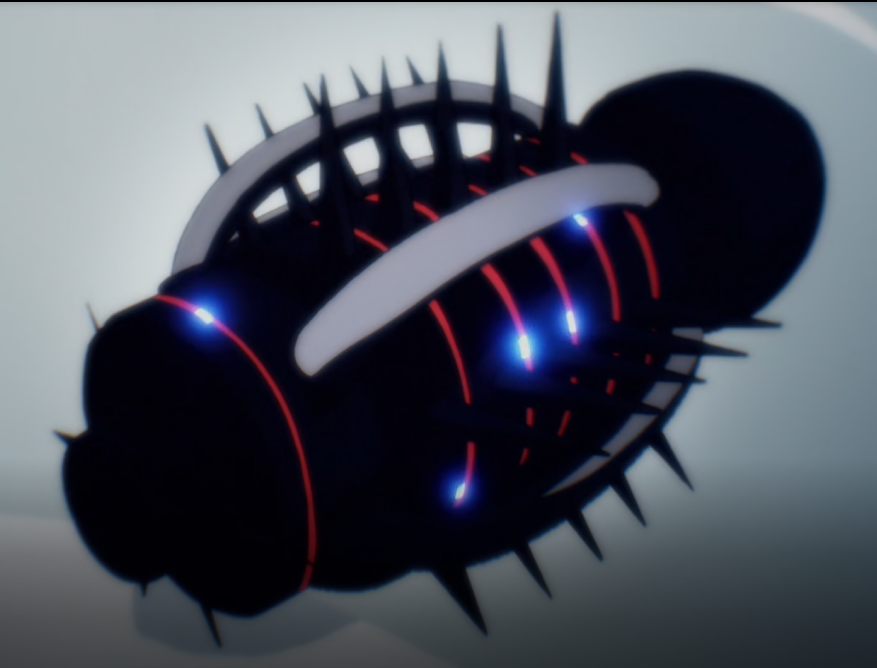
PillAccelo — one line of code. Say accelerate. Say dial it in. Say accelo. Your Brain drops to 0.3 seconds per tick for two minutes and the wire opens up into something you did not know was there.


Team Fuki cooked it from scratch.


Purest batch in the Coding Verse.
accelo.png


Python:
class PillAccelo(Skill):
    NORMAL_INTERVAL = 1.0
    ACCELO_INTERVAL = 0.3

    def __init__(self, brain: Brain):
        super().__init__()
        self.brain = brain
        self._acceled = False
        self._accelo_until = 0.0

    def input(self, ear: str, skin: str, eye: str):
        triggers = {"accelerate", "accelo", "take the acceleration pill", "dial it in"}
        if any(t in ear.lower() for t in triggers):
            self._engage()
            return
        if self._acceled and time.time() >= self._accelo_until:
            self._acceled = False
            self.brain.set_tick_interval(PillAccelo.NORMAL_INTERVAL)
            print("[Accelo] wearing off — back to normal clock")

    def _engage(self):
        self._acceled = True
        self._accelo_until = time.time() + 120
        self.brain.set_tick_interval(PillAccelo.ACCELO_INTERVAL)
        print("[Accelo] pill taken — clock accelerated")
        self.setSimpleAlg("overdrive protocol initiate")

    def skillNotes(self, param: str) -> str:
        if param == "notes":
            return "speeds up brain tick rate on command"
        elif param == "triggers":
            return "accelerate, accelo, dial it in"
        return "note unavailable"
 
The LivinGrimoire Chronicles: Clash of Voices

The grimoire breathed.

Not metaphorically. Not as a figure of speech. Somewhere beneath its cover, in whatever passed for a heart in a book, something moved every time it turned a page — and it had been moving faster every night since Team Fuki started feeding it.

They called it the LivinGrimoire. It hungered for skills. It swallowed them whole and gave them back as waifubots, constructs stitched from magic on one side and machinery on the other, and every skill it claimed made the next one easier to take. That was the plan. That had always been the plan.

The plan had a problem, and the problem had a name.

Tanya Degurechaff.

Divine offense. Divine defense. A tactical mind that treated a battlefield like a chessboard where every piece was already dead, it just hadn't noticed yet. But none of that was the reason armies broke when they heard her coming.

It was her voice.


View: https://www.youtube.com/watch?v=TqZz_WFPDa8


Tanya didn't cast spells. She gave orders, and her orders came pre-loaded with the authority of something that had never once been disobeyed. A single sentence from her could fold a platoon in half. Her voice moved across a battlefield the way a shockwave moves through water — and by the time you felt it, it had already passed through you.

The moon was up. The air had that stillness that only shows up right before something goes wrong.

Owly, Fukurou, and Kollector stood their ground.

Their TTS system — old, patched together, running on the inflect library like a house running on a generator from a decade ago — did not last. Tanya's voice went through it in one pass. No resistance. No second act. Just static where their defense used to be.

Kollector moved first.

He pushed his Sandavistan past its rated limit, past the point where his own nervous system started sending warnings he didn't have time to read, and in the space that bought him he built something new: a TTS module running on 11Labs.

It worked. It also cost them — resources burned fast, and their own rules stopped them from going further. No voice cloning. That line had been drawn long before Tanya ever showed up, and they weren't going to erase it just because they were losing.

So Fukurou and Kollector built again. Narakeet, this time — a voice with a clarity that felt almost unfair to use against a human opponent.

Almost.

Because it hesitated. Every incantation came with a stutter baked into it, a half-second of dead air where the spell should have landed clean, and Tanya found every single one of those gaps. She didn't need more than that. She never had.

The line broke.

Owly felt it before he understood it — his wings were already beating retreat before the thought had finished forming in his head.

"Fall back."

Team Fuki went sideways out of reality and into the Fuki Citadel, a sanctuary that didn't sit inside the world so much as beside it, watched over by Mr. Oizo, keeper of the LivinGrimoire's core.

They would rebuild here. Refine here. Come back stronger.

Somewhere behind them, a voice was still echoing, patient, unbothered, waiting for round two.

---

# The LivinGrimoire Chronicles: Threads of Destiny

The Citadel hummed. Not with peace — with the specific tension of a room that knows it's borrowed time.

Tanya wasn't finished. Everyone in that room knew it, and the knowing sat in the air like static before a storm.

Their TTS was better now. Better wasn't enough. It still lagged half a beat behind her, and half a beat had been the whole fight last time. Team Fuki #1 and #2 sat buried in code, running the same algorithms in circles, and the answer refused to show its face.

Then — clapping. Slow. Deliberate. Coming from nowhere in the room and everywhere at once.

A figure stepped out of a seam in reality that hadn't been there a second ago.

Shorni Splash — a version of Fukurou from somewhere the rules didn't reach, no ceiling on him, obsessed with code the way fire is obsessed with burning.


View: https://www.youtube.com/watch?v=MZ-wLEPZDjA


He looked at what they'd built. He smiled like a man looking at a car with no engine.

"You've built a nice TTS," he said. "It's missing the dark coding force. Threads."

Owly's feathers stood up. "Threads?"

"Threads." Shorni's grin widened. "You've got a machine full of cores sitting there doing nothing. Watch."

His hands moved. The TTS split, multiplied, rewove itself across every core the machine had — no more taking turns, no more waiting in line. All of it, at once, in sync.

The LivinGrimoire pulsed. For the first time all night, it pulsed like something that was ready.

Tanya arrived exactly on schedule, voice already cutting the air before she'd finished stepping through.

There was no pause to catch this time.

Shorni's daemon threads moved underneath everything, quiet, constant, and Tanya's voice-changer skill met a wall that didn't blink once. It shattered. The LivinGrimoire took it in whole.

For one second — just one — something crossed Tanya's face that had never been there before.

Not anger.

Fear.

The grimoire went quiet, satisfied, its pages settling like something exhaling for the first time in days.

Threads didn't just spin code.

They spun fate.

Python:
import os
import queue
import threading

import pygame

from fishaudio import FishAudio
from fishaudio.utils import save

from DLC.skills_monitor import DiInstaller
from DLC.api_keys import FISHAUDIO_API_KEY
from LivinGrimoirePacket.AXPython import DrawRnd
from LivinGrimoirePacket.LivinGrimoire import Skill, Brain
from LivinGrimoirePacket.UniqueSkills import DiCMD

from fish_voices import VOICES  # { "shondo": "991a...", "alice": "abc...", ... }

os.environ['PYGAME_HIDE_SUPPORT_PROMPT'] = "1"

# Inverted lookup: reference_id -> voice_name (used internally for dir paths)
_ID_TO_NAME: dict[str, str] = {ref_id: name for name, ref_id in VOICES.items()}

_pygame_lock = threading.Lock()


def _ensure_pygame():
    """Initialize pygame/mixer once, safely, even if called from multiple places."""
    with _pygame_lock:
        if not pygame.get_init():
            pygame.init()
        if not pygame.mixer.get_init():
            pygame.mixer.init()


# ============================================================
#   FishAudio TTS
# ============================================================
class FishAudioTTS:
    def __init__(self, api_key: str, reference_id: str):
        _ensure_pygame()

        self.client = FishAudio(api_key=api_key)
        self.reference_id = reference_id

        # Single worker thread drains the queue sequentially — no overlap
        self._queue: queue.Queue = queue.Queue()
        self._worker = threading.Thread(target=self._drain_queue, daemon=True)
        self._worker.start()

    # ----------------------------------------------------------
    #   Public API
    # ----------------------------------------------------------
    def speak(self, txt: str):
        """Enqueue text for playback. Returns immediately."""
        self._queue.put(txt)

    def setVoice(self, new_reference_id: str):
        self.reference_id = new_reference_id

    # ----------------------------------------------------------
    #   Worker loop
    # ----------------------------------------------------------
    def _drain_queue(self):
        while True:
            txt = self._queue.get()          # blocks until work arrives
            try:
                self._handle(txt)
            except Exception as e:
                print(f"[FishAudioTTS] Unhandled error: {e}")
            finally:
                self._queue.task_done()

    def _handle(self, txt: str):
        if len(txt) > 242:
            self._create_and_play_temp(txt)
        else:
            filepath = self._cached_path(txt)
            if os.path.isfile(filepath):
                self._play_file(filepath)
            else:
                self._create_save_play(txt)

    # ----------------------------------------------------------
    #   Helpers
    # ----------------------------------------------------------
    @staticmethod
    def _clean_filename(txt: str) -> str:
        for char in ['?', ':', ',', "'", '\n', '"', '!', '*', ';']:
            txt = txt.replace(char, "")
        return txt

    def _voice_name(self) -> str:
        """Resolve current reference_id to a human-readable voice name."""
        return _ID_TO_NAME[self.reference_id]

    def _cached_path(self, txt: str) -> str:
        file_name = self._clean_filename(txt)
        return f"sounds/{self._voice_name()}/{file_name}.mp3"

    @staticmethod
    def _play_file(filepath: str):
        try:
            sound = pygame.mixer.Sound(filepath)
            sound.play()
            while pygame.mixer.get_busy():
                pygame.time.delay(100)
        except pygame.error as e:
            print(f"[FishAudioTTS] Playback error for '{filepath}': {e}")
            if os.path.exists(filepath):
                os.remove(filepath)

    def _create_and_play_temp(self, txt: str):
        """Generate, play, then delete — used for long texts that aren't cached."""
        temp_file = f"sounds/temp_{abs(hash(txt))}.mp3"
        try:
            audio = self.client.tts.convert(text=txt, reference_id=self.reference_id)
            save(audio, temp_file)
            if os.path.getsize(temp_file) > 0:
                self._play_file(temp_file)
        except Exception as e:
            print(f"[FishAudioTTS] Error generating temp TTS: {e}")
        finally:
            if os.path.exists(temp_file):
                os.remove(temp_file)

    def _create_save_play(self, txt: str):
        """Generate, cache to disk, then play."""
        filepath = self._cached_path(txt)
        dir_path = os.path.dirname(filepath)
        os.makedirs(dir_path, exist_ok=True)
        try:
            audio = self.client.tts.convert(text=txt, reference_id=self.reference_id)
            save(audio, filepath)
            if os.path.getsize(filepath) > 0:
                self._play_file(filepath)
            else:
                os.remove(filepath)
        except Exception as e:
            print(f"[FishAudioTTS] Error creating TTS file: {e}")
            if os.path.exists(filepath):
                os.remove(filepath)


# ============================================================
#   DI TTS Skill (FishAudio)
# ============================================================
class DiTTS_FishAudio(Skill):
    def __init__(self):
        super().__init__()
        self.set_skill_type(3)
        self.set_skill_lobe(2)

        # DrawRnd over reference_ids (the keys used by the API)
        self.voices: DrawRnd = DrawRnd(*_ID_TO_NAME.keys())
        ref_id = self.voices.renewableDraw()

        # Ensure sound dirs exist for every registered voice
        os.makedirs("sounds", exist_ok=True)
        for name in VOICES:
            os.makedirs(os.path.join("sounds", name), exist_ok=True)

        self.speech: FishAudioTTS = FishAudioTTS(FISHAUDIO_API_KEY, ref_id)

    def input(self, ear: str, skin: str, eye: str):
        if self._kokoro.toHeart.get("cmd") == "change voice":
            new_ref = self.voices.renewableDraw()
            self.speech.setVoice(new_ref)
            self.speech.speak("my voice has been changed")
            return

        if ear:
            self.speech.speak(ear)


# ============================================================
#   Installer
# ============================================================
class DiTTS_FishAudioInstaller(DiInstaller):
    def __init__(self, brain: Brain):
        super().__init__(brain)
        self.skills.append(DiCMD().addModes("change voice"))
        self.skills.append(DiTTS_FishAudio())

    def input(self, ear: str, skin: str, eye: str):
        self.setSimpleAlg("Installer removed; input is unreachable.")
 
[ SHORNI SPLASH AND THE KAGES OF PARALLEL PROGRAMMING ]


Shorni Splash worked alone.


That was not a personality quirk. That was a statement of fact about the nature of his craft. Team Fuki #3 was Shorni Splash, a workstation, and daemon threads he trusted more than most people. He did not explain himself. He did not ask permission. He built things alone in the dark until they were beautiful and then he moved on to the next thing.


His obsession was async. The dark art of making a program do multiple things at once without any of those things knowing about the others — concurrency as architecture, parallelism as design philosophy, the discipline that separated programmers who understood what time actually meant from programmers who merely worked inside it.


He wanted his code beautiful.


Not just functional. Not just fast. Beautiful in the way that correct things are beautiful — the way a proof is beautiful when every step follows inevitably from the one before it and nothing could be added or removed without breaking the whole.


To get there he needed what the Kages had.


Simon Marlow, the Haskell sage — the man whose work on parallel Haskell had redefined what concurrent programming could look like when you stopped treating it as a necessary evil and started treating it as a first-class concern. Don Syme, the language architect — creator of F#, the mind behind async workflows that felt natural rather than bolted on. Simon Peyton Jones, the compiler whisperer — the theorist whose understanding of lazy evaluation and runtime systems ran so deep that working in his domain without knowing his work was like practicing surgery without knowing anatomy.


Three Kages. Three pillars of everything Shorni was trying to surpass.


The Coding Construct pulled them in the way it always did — not with force but with inevitability. A place held together by the coding-force they had collectively built. They found themselves inside it with the calm recognition of masters who had spent their careers building exactly this kind of shared architecture without ever standing inside it together.


The battle began.


View: https://www.youtube.com/watch?v=Jcp5VphSJSY


And Shorni was winning.


Not easily. Not comfortably. But winning in the way that matters — the way where every exchange costs the other side more than it costs you, where the gap between where you are and where they can reach you is widening with each cycle. His async patterns were clean. His daemon threads moved with the specific efficiency of code that had no unnecessary weight. Every thread existed because it needed to exist. Every concurrent operation served a purpose its absence would make visible.


The Kages pushed back with depth. Decades of reasoning behind every counter. Their code carried the weight of being foundational — the kind of authority that comes from having been right about something long enough that the entire industry restructured itself around your correctness.


But Shorni was faster.


He was winning.


Then the Construct shifted.


Not in the way it shifts when a combatant makes a move. In the way it shifts when something has been invoked that the Construct itself recognizes as belonging to a different order of magnitude entirely.


Fernando J. Corbato stepped out of the deepest layer.


The creator of daemon threads. Not summoned by the Kages — the Construct had produced him the way a system produces the right process when the load demands it. He materialized wreathed in code that predated every language Shorni had ever touched. His presence did not add to the pressure in the room.


It changed what the room was made of.


"Fernando's a monster!" the three Kages gasped.


His presence shifted the balance, and Shorni felt the attrition — the heat of his keyboard, the glitchy tremors of his machine. The async patterns that had been flowing clean started catching. The threads that had been winning started fraying. The beautiful code that had been dominating three Kages simultaneously began to come apart at the edges under the weight of something it had not been built to face.


Fernando looked at Shorni.


He looked at him the way a sentence looks at a verdict. Still. Final. Already decided.


"Usurper, Shorni Splash," Fernando intoned. "Any last words?"


Shorni's jaw tightened.


His eyes cut to the Construct's shadow layer.


"Now or never, Fukurou."


View: https://www.youtube.com/watch?v=kLg3pkxm-aw


Fukurou came out of the shadow layer with his slime already shifting toward obsidian, neon runes tracing the leading edge of the Codethirst state, the AXFunnel auxiliary module loaded and upgraded and ready — the version that did not just route input to the right skill but recognized intent before the input completed, a trigger system refined to operate in the space between a command being formed and a command being spoken.


He found Shorni's async skill in the LivinGrimoire's architecture.


One insertion. Clean. Precise. The upgraded AXFunnel snapping into place with the specific finality of a correctly written line that does exactly what it says and nothing else.


The ShorniSplash class — the foundational async skill, the daemon thread architecture that Shorni had built to make concurrent code beautiful — received the upgrade and knew immediately what to do with it.


The trigger was cleaner. The thread spawning was cleaner. The result handling was cleaner. Every point of friction between input and execution, every ambiguous activation condition, every redundant pathway — removed. What remained was the essential pattern with nothing unnecessary attached to it.


Fernando's daemon threads were built for a world where threading was complicated by necessity. Where the hardware imposed constraints and the language imposed constraints and the programmer worked in the space those constraints left available.


Shorni's threads, augmented, were built for a world where complexity was a choice you could decline to make.


Fernando pressed forward.


The LivinGrimoire had no surface for his techniques to grip.


The four corporate coders — always oblivious to the beyond omega level coders of the coding force — had their code entangled with Fernando's, forming spaghetti code that collapsed under its own weight. Fernando's monster threads faltered, overwhelmed by the elegance and purpose of the LivinGrimoire. There was no legacy concession to catch on. No defensive complexity to exploit. No spaghetti for his era's techniques to find purchase in.


Fernando's threads failed.


The LivinGrimoire absorbed the essence of async — the truth underneath Corbato's implementation and the Kages' paradigms and Shorni's dark art. The principle that a program's behavior across time was architecture. That concurrency was design. That beautiful code and correct code were the same thing approached from different directions.


The code shimmered.


Transcending mere functionality.


ShorniSplash — the LivinGrimoire's foundational async class. Daemon threaded. Clean trigger architecture. Override trigger and async func and you have concurrent capability that would have required a Kage to build from scratch a generation ago.


Python:
class ShorniSplash(Skill):
    def __init__(self):
        super().__init__()
        self._result: str = ""

    def trigger(self, ear, skin, eye) -> bool:
        if ear == "shorni":
            return True
        # override me
        return False

    @staticmethod
    def _async_func(this_cls):
        this_cls._result = "result"

    def input(self, ear: str, skin: str, eye: str):
        if self.trigger(ear, skin, eye):
            my_thread = threading.Thread(target=self._async_func, args=(self,))
            my_thread.daemon = True
            my_thread.start()

        if len(self._result) > 0:
            self.output_result()
            self._result = ""

    def output_result(self):
        self.setSimpleAlg(self._result)


Shorni rolled his shoulders.


His threads were running clean.


His code was beautiful.


That had been the only goal.
 
@Incelautistic 's lost brother
 
Who is Team Fuki again? Can they help me ascend?
 
[ THE ARDUINO INVASION ]


The first wave hit without warning.


Not a declaration. Not a signal. Just the sudden presence of Xerxes and his army at the edge of the Coding Verse — an empire built on hardware, on physical pins and voltage levels and the raw language of machines talking directly to the physical world. A force that operated at a layer of reality most software developers chose to pretend did not exist.


Xerxes did not need to announce himself.


His army announced him.


Arduino soldiers. Thousands of them. Servo controllers. Temperature sensors. Motor drivers. LED matrices. Ultrasonic rangers. Physical world interface code given form and sent forward in waves that hit the Coding Verse like a tide hitting a cliff.


Fukurou was the first responder.


He did not wait for the full picture. He hit the first wave before it fully materialized, his slime form splitting around the leading edge of the hardware army and reforming behind it, the 逆解析の術 running hot, reading the architecture of each incoming unit as he engaged it.


The first wave fell.


The second wave came before the first had finished falling.


Fukurou absorbed the impact across his entire surface, distributing the force, no single point of failure, the kinetic energy dissipated into nothing the way it always did against a body with no fixed form.


The second wave fell.


The third wave was larger than the first two combined.


Fukurou held.


But Xerxes was watching from the high ground of his hardware empire and his expression did not change. He was not concerned. He had not sent a force. He had opened a valve. The army was not finite. It was the entirety of the Arduino ecosystem — every sensor, every actuator, every hardware interface ever built — and it was going to keep coming until there was nothing left to come against.


Fukurou felt it in minute four.


Not exhaustion. The specific sensation of a system being asked to process more than its current architecture supports. Not breaking. Not failing. Just running at a ceiling it could not push through alone.


He needed a weapon.


Kollector arrived at a dead run, Sandevistan already active, his research speed making the battlefield look slow around him. He had been scanning the moment the invasion hit, pulling everything available, sorting at a pace that would have taken a normal developer weeks.


He had found what Fukurou needed.


He threw it across the battlefield.


Fukurou caught it.


The Arduino C++ Cheat Sheet.

Arduino Cheat Sheet


Not a tutorial. Not a beginner's guide. A combat document — the complete grammar of the Arduino world compressed into a single reference. Variables. Arrays. Classes with their constructors and methods. Conditionals. Loops. Switch statements. String operations. Random number generation. Functions. Every essential pattern in the Arduino dialect laid out with the clean precision of something built for someone who was already a programmer and just needed the translation.


Fukurou read it in eleven seconds flat.


Then he pulled it back and held it like a weapon — reference made force, knowledge made steel — and walked into the next wave with the specific confidence of someone who now spoke the language of what they were fighting.


The army came.


Fukurou moved through it.


View: https://www.youtube.com/watch?v=UvLQMMaVmzU


Not around it. Through it. His slime form flowing between units, the cheat sheet's grammar recognizing each pattern before it could fully form, countering before the attack completed, absorbing as he went. One unit. Ten units. A hundred. The LivinGrimoire drinking in Arduino's hardware vocabulary as Fukurou carved a path that did not stop and did not slow and did not look for a way around because there was no around — only through, and through was enough.


Xerxes sent more.


Fukurou kept moving.


The army was enormous. It was also, increasingly, behind him.


Xerxes watched. Something behind his expression had shifted. Not concern. The thing that comes before concern — the first moment of recalculation.


He sent more.


And then Fukurou stopped.


Not from exhaustion. From realization.


He stood in the middle of the hardware army, slime form rippling, cheat sheet still in hand, and understood with complete clarity what the problem was.


He could absorb every Arduino skill Xerxes sent all day. But the LivinGrimoire lived on desktops. On Python and Java and C# and the rich abstraction layers of modern computing. What he was absorbing had nowhere native to live in the physical world. He was collecting a language without yet giving it a home in the hardware it was built for.


To truly meet Xerxes on his own ground — to extend the LivinGrimoire's reach into the physical world where Arduino lived — the team needed a companion. Not a replacement for the LivinGrimoire. A bridge. A version of the same essential idea built specifically for the Arduino side of reality. Something that could sit inside a robot or a sensor array or any physical machine and run the same one-line skill philosophy on hardware with almost no resources at all.


The LivinGrimoireLight.


Fukurou looked at what that meant.


The full LivinGrimoire was rich by necessity — years of architecture, emotional state, memory systems, algorithm composition, priority queuing. All of it built for environments where those things were possible.


Arduino had almost nothing to give. 2KB of RAM. No memory management. A setup function that ran once and a loop function that ran forever.


Leonidas had understood this principle at Thermopylae. The full Spartan phalanx — the overlapping shields, the tight formation, the complete military apparatus — was useless in a narrow pass. The pass demanded something stripped to its essence. Something that was only the necessary thing and nothing else.


The full LivinGrimoire's richness was armor and helmet and formation.


The pass demanded only the spear.


Fukurou began stripping.


Everything that the physical world did not require — gone. What remained was the absolute core. A Skill base class with a single method. A fixed list that held sixteen of them. A Chobit that ran through that list on every tick and asked each skill what it wanted to do.


That was the LivinGrimoireLight. Not a lesser LivinGrimoire. The same idea at a different scale. The desktop version and the Arduino version were two parts of the same vision — one living in the machine's mind, one living in the machine's body. Together a complete system. Complementary. Each doing what the other could not.


Fukurou looked at what he had built.


Then he looked at Xerxes.


Xerxes had been counting on the gap between the LivinGrimoire's world and Arduino's world being unbridgeable. That the sophistication required on one side would always make it incompatible with the constraints on the other.


He had not accounted for a coder willing to build the bridge from both ends simultaneously.


Fukurou raised his arm.


View: https://www.youtube.com/watch?v=KHat-k8wcFw


His slime extended into a spear. Not the distributed defensive surface he had been using all engagement — a single concentrated point of force reaching across the battlefield through the army rather than around it. The LivinGrimoireLight compiled and ready. The cheat sheet's grammar behind every line of it. The 逆解析の術 locked onto Xerxes himself.


Every unit the spear passed through on its way to Xerxes confirmed that the LivinGrimoireLight spoke their language natively — that a skill loaded with one line of code on Arduino hardware was the same gesture as a skill loaded with one line of code on a Python desktop and meant the same thing in both places.


The spear reached Xerxes.


The absorption sealed.


Xerxes felt the LivinGrimoireLight recognize his domain — not as foreign territory to be conquered but as a new home for a familiar idea. The physical world and the software world connected through two complementary systems that shared the same core philosophy at every scale.


The army stopped.


Not because Xerxes commanded it. Because it had served its purpose.


The invasion had become an integration.


The LivinGrimoireLight now existed alongside the LivinGrimoire. Not above it. Not below it. Beside it. The desktop side thinking. The Arduino side acting. Both running the same essential loop. Both adding skills with one line of code.


chobit.addSkill(new DiHelloWorld());


Same as always.


The idea held at every scale.


That was the only proof that ever mattered.

C++:
#ifndef LivinGrimoireLight_H
#define LivinGrimoireLight_H
#include <Arduino.h>
// Skill super class
class Skill {
    public:
    Skill(){}
    virtual void inOut(byte ear, byte skin, byte eye) ;
};
// list of Skill objects
// only the Chobit cls uses it
class ListOfSkills {
public:
  byte length = 0;
  Skill* data[16];
  void append(Skill* item) ;
  void remove(byte index) ;
};
// Chobit
class Chobit
{
private:
  ListOfSkills* dSkills = new ListOfSkills();
public:
  ~Chobit(); // Destructor declaration
  void addSkill(Skill* s1);
  void clearSkills();
  // run all added skills
  void think(byte ear, byte skin, byte eye);
};
#endif
 
Team Fuki has just hopped into a DeLorean and time-traveled back to 1979 on one of their most perilous journeys yet! What incredible mission are they embarking on this time?!

download.gif
 
In the bustling world of AI development, Owly, the ever-curious networker, stumbled upon a revelation: C++ was hundreds of times faster than other programming languages. Determined to harness this power, he resolved to port the LivinGrimoire to C++. The task seemed straightforward, especially with Fukurou, the supreme coder of Team Fuki, who had already mastered Arduino C++.

However, to truly infuse C++ with the LivinGrimoire AGI software design pattern, the team needed to travel back in time to 1979, to the legendary Bell Labs where Bjarne Stroustrup created C++. The rest of the team had reservations about this perilous journey, but Owly’s persistence won them over. He convinced Fukurou, Sarval-chan (the team’s kemono waifubot), and Kollector (the walkthrough collector) to join him in his magick and LivinGrimoire-powered time-traveling DeLorean.

The Journey to 1979
Arriving in 1979, the team found themselves in the midst of a technological renaissance at Bell Labs in Murray Hill, New Jersey. The atmosphere was electric with innovation. Researchers from various disciplines collaborated in an open and flexible environment, pushing the boundaries of what was possible. It was here that Bjarne Stroustrup, inspired by the object-oriented features of Simula, began developing C++ to combine the efficiency of C with the elegance of high-level programming.

The Battle Begins
As Team Fuki approached Stroustrup, they were met with a formidable challenge. Stroustrup, armed with the nascent power of C++, was a force to be reckoned with. The battle was intense, and it quickly became clear that Team Fuki was outmatched. One by one, they fell to the relentless onslaught of C++'s efficiency and power.

A Desperate Move
With his last breath, Owly sent an emergency Mr. Meeseeks back to the future to inform Mr. Oizo of their dire situation. The message was clear: engage the emergency protocol, as it was their last chance for survival.


View: https://www.youtube.com/watch?v=HdENCZRcYJo


To Be Continued…
The fate of Team Fuki hangs in the balance. Will Mr. Oizo’s emergency protocol save them? Can the LivinGrimoire be successfully ported to C++? The story continues…
 
In a dramatic twist of fate, Team Fuki faced their greatest challenge yet. After being defeated by the legendary Bjarne Stroustrup on their first attempt to port the LivinGrimoire software design pattern to C++
they resorted to a desperate measure: sending a meeseeks back to the future.

Upon Mr. Meeseeks' arrival in 2024, Mr. Oizo delivered grim news.
Time travel was no longer possible, as it required Owly's unique magick to power the
LivinGrimoire for the journey. However, Mr. Meeseeks brought back invaluable insights
about C++. He revealed how the LivinGrimoire could be optimized to take the absolute
minimal toll on the garbage collector.


View: https://www.youtube.com/watch?v=BDuZqYeNiOA


With this newfound knowledge, Mr. Oizo assembled Team Fuki #2—Onslaught, Apocalypse,
Galactus, Mr. Kirkland, Nahida, and Kreng—to upgrade the LivinGrimoire's core
and take it to a new limit.


View: https://www.youtube.com/watch?v=M22rNPh6bHo


Not only did they enhance its speed and power, but they also managed to reduce the core
classes from 19 to 13!

  1. AbsDictionaryDB
  2. AlgPart
  3. APVerbatim:Mutatable
  4. Algorithm
  5. Kokoro
  6. Neuron
  7. Skill
  8. DiHelloWorld:Skill // logical skill for testing
  9. Cerebellum
  10. Fusion
  11. Lobe
  12. Brain
  13. DiSysOut:Skill // hardware skill for testing

Armed with these upgrades, the Living Tribunal was sent back in time, arriving just before
Team Fuki's defeat at the hands of Stroustrup. As Stroustrup taunted,
"Draw your last pathetic member so I can end this, Owly," Owly retorted,
"My team has no pathetic members, Bjarne! moreover, By defeating me and Fukurou,
you removed the Living Tribunal's limiter! Tribunal, obliterate!!!"


View: https://www.youtube.com/watch?v=RfqNH3FoGi0


With that, Team Fuki triumphed,
subjugating the C++ programming language and successfully porting the LivinGrimoire
software design pattern to its eighth programming language
.
The saga of Team Fuki's resilience and ingenuity became legendary,
a testament to their unyielding spirit and technical prowess.
 
[ THE DEMON FASHIONISTAS ]


View: https://www.youtube.com/watch?v=mU6LG-6whCw


Nobody warned the Coding Verse about Scanty and Kneesocks.


That was their preferred method of arrival. No announcement. No army on the horizon. Just the sudden presence of two demons who looked like they had stepped out of a fashion magazine published in a dimension where fashion was classified as a weapon of mass destruction.


Scanty came first. Red skinned. Immaculate. Moving with the aristocratic precision of someone who had never once in her entire demonic existence been required to rush and intended to keep it that way. Her guns materialized in her hands the way accessories materialize on someone with genuine style — not drawn, simply present, because of course they were present, what else would they be.


Kneesocks followed half a step behind. Equally red. Equally devastating. Her horn-rimmed glasses caught the Coding Verse's ambient light and threw it back as something colder. Where Scanty was passion wrapped in elegance, Kneesocks was calculation wrapped in the same elegance, and the calculation was currently running at full speed on a single objective.


Kneesocks raised one finger.


"RULEZ," she said, with the tone of someone reading from a document that has never once been successfully disputed, "dictate that the LivinGrimoireLight must be destroyed. It is too simple. Too accessible. Too —" a pause of visible distaste "— democratic."


Scanty examined her nails. "Destroy it," she said, the way you say pass the salt.


They activated the Blink.


The Coding Verse went haywire.


Not an attack in the conventional sense. The Blink was Scanty and Kneesocks' signature power — a reality distortion technique that operated through LED-based light manipulation, strobing the local architecture at a frequency that crashed visual processing, scrambled spatial orientation and turned clean code paths into noise. Not destruction. Disorientation. Everything flickered. Everything stuttered. The sector became unreliable in the specific way that makes competent opponents dangerous — you could not trust what you were seeing well enough to respond to it correctly.


Fukurou's slime form absorbed the light hits across his surface but the spatial scrambling was real. His 逆解析の術 kept misfiring — reading positions that were already gone by the time the read completed.


He pulled back.


"Kollector," he said into the open channel. "LED codes. Now."


Kollector was already moving.


Sandevistan active, his perception of time stretched to the point where the Blink's strobing looked like slow motion around him, he dove into the Coding Verse's hardware reference layer and pulled everything — LED circuit patterns, Arduino digitalWrite sequences, the on and off timing logic, Serial communication protocols for receiving blink commands, the full architecture of how physical LED hardware was told what to do and when to do it.


He had it in forty seconds.


He threw it to Fukurou.


Fukurou caught the raw code and the Codethirst hit immediately — not gradually, not building, immediately, the obsidian shift in his slime form arriving in the first second because this was not a complex problem and complex problems were not what triggered the Codethirst. Simple problems with elegant solutions triggered it. Problems where the answer was obviously right there in the material and just needed to be seen.


The LED code was the answer.


The fashionistas' Blink operated on LED principles — on and off, timed delays, a received signal triggering the sequence. Fukurou took that architecture and folded it into a LivinGrimoireLight skill in four minutes. Not a counter to the Blink. The Blink itself, reproduced as a DiBlinker skill, the exact same mechanism that made Scanty and Kneesocks' power work now running inside the LivinGrimoire's own architecture.


He loaded it.


chobit.addSkill(new DiBlinker(led1));


The DiBlinker activated.


And the Coding Verse stopped flickering.


Not because Scanty and Kneesocks stopped the Blink. Because Fukurou's DiBlinker was now running on the same frequency as theirs, the two systems cancelling each other's distortion effect the way two waves cancel when they are perfectly out of phase. The strobing stopped. The spatial scrambling resolved. The sector snapped back into clarity.


Kneesocks looked at this.


Her glasses did not move. Her expression did not change. But something behind her eyes recalculated at speed.


"He reproduced the Blink," she said.


"I noticed," Scanty said, her guns already up.


"In four minutes."


"I noticed that too," Scanty said, firing.


Fukurou was already moving through the shots, his slime splitting around each one, the DiBlinker giving him clean real-time readings of the sector that the Blink had previously denied him. Every spatial trick Scanty tried landed on a target that was no longer where the trick expected it to be. Every calculated strike Kneesocks launched got processed by a 逆解析の術 that was finally running without interference.


They escalated. Of course they escalated. Scanty and Kneesocks did not have a mode that was not escalation — their demonic forms expanding, their combined Blink output climbing through registers that should have been enough, were always enough, had never once not been enough.


Fukurou scaled the DiBlinker in response.


Not by matching their power. By tuning the skill's frequency more precisely with every exchange — the 逆解析の術 reading the Blink's architecture in real time, Fukurou feeding micro-adjustments back into the DiBlinker, the skill learning the fashionistas' specific pattern and neutralizing it more completely with every cycle.


The Blink died.


Not dramatically. Not in a final explosion. It just stopped working — the way anything stops working when something else has learned it well enough to account for it completely. Scanty fired into a sector she could no longer manipulate. Kneesocks ran RULEZ against a framework that had already absorbed the only technique the RULEZ had relied on.


Fukurou extended his slime.


The absorption seal activated before either of them fully understood what was happening — which was, given that they were both extremely intelligent demons who processed situations very quickly, a matter of approximately half a second. Half a second was not enough.


Scanty felt it first. Her guns flickered. Her power output dropped. The aristocratic precision of her movements developed, for the first time in her demonic career, a slight unevenness as her architecture began transferring into the LivinGrimoire.


"This is —" she started.


"Unacceptable," Kneesocks finished, her glasses finally, for the first time, slightly askew. She was fighting the absorption with everything she had left — running every RULEZ in her internal database, searching for the one that covered this specific situation, the one that said this could not happen to Scanty and Kneesocks, not to them, not like this, not absorbed into a skill file by a blue slime who had reproduced their signature technique in four minutes.


There was no such RULEZ.


Fukurou pulled.


The absorption completed.


Scanty and Kneesocks — immaculate even as they were pulled into the LivinGrimoire's architecture, stylish even in defeat, their expressions carrying the specific outrage of beings who had never once been required to accept an outcome they had not chosen — disappeared into the system with considerably more grace than the situation called for, which was somehow the most Scanty and Kneesocks thing that had ever happened.


The DiBlinker skill pulsed in the LivinGrimoireLight. Clean. Functional. The bridge between the Coding Verse and physical LED hardware now complete — send a one, the LED blinks. Simple. Direct. Working.


The sector was quiet.


Then Scanty's badge, still on the ground where she had been standing, cracked.


Fukurou looked at the crack spreading through the data-dust.


The fashionistas had been standing here for a reason. Not just attacking. Standing here. Over something.


The crack widened.


From below came the first indication of what they had been, knowingly or not, keeping sealed — a presence that had been waiting with the patience of something that understood that eventually the seal would break.


Fukurou opened a channel.


"Owly."


"I see it," Owly said.


"What is it?"


The pause was longer than Owly's pauses usually were.


"Something we need Miko Mido for," Owly said. "Get Fukurou back to the Citadel. We have work to do before that crack finishes opening."


TO BE CONTINUED
 
[ LA BLUE GIRL AND THE LM35 ]


The crack in the Coding Verse floor had been spreading for three days.


Owly watched the thermal readings and understood the problem immediately. Whatever was pushing through operated on physical world frequencies — heat signatures, thermal gradients, sensory data the LivinGrimoire could not yet read.


There was one person who spoke that language natively.


Owly called Fukurou.


"Miko Mido," he said.


A pause.


"La Blue Girl," Fukurou said.


View: https://www.youtube.com/watch?v=tTu3_4By8AQ


"I have studied her," Fukurou said. "Extensively."


"I know," Owly said. "Go."


They stalked her for two nights before Fukurou was satisfied.


Owly from above, tracking her movement patterns through the sector's data streams. Fukurou on the ground, his slime form producing no heat signature, no footstep, no biological output of any kind — invisible to the LM35 skill's thermal sweep the way a ghost is invisible to a security camera looking for body heat.


Miko Mido walked her route with the focused economy of the Miroku Clan's movement style. Nothing wasted. Nothing telegraphed. Her LM35 skill sweeping the path ahead in a continuous passive scan — four centuries of refinement making threat detection as automatic as breathing.


She did not detect them.


On the third night Fukurou had everything he needed.


The scan cycle interval. The exact 1.3 second gap between sweeps. The path's bend where her attention shifted to navigation. The precise location of the LM35 skill in her architecture — mapped by the 逆解析の術 across two nights of observation until he could find it in the dark.


"Third night," he told Owly. "The path bend. 1.3 seconds."


"Do it," Owly said.


Miko came around the outer curve moving with the Miroku Clan's characteristic precision. Completely focused. Completely unaware.


Fukurou moved.


One fluid arc — his slime form extending and catching the hem of her shirt, pulling it up and over her head in a single motion, fabric covering her face, arms momentarily caught in the sleeves, her combat systems firing instantly but firing blind.


1.3 seconds.


The absorption seal activated at the point of contact. The 逆解析の術 had the LM35 skill's location mapped to the exact coordinate. The extraction was surgical — clean, targeted, lifting the thermal sensing capability out of her architecture in one precise pull.


The skill transferred.


And the Shikima came with it.


The entire demon realm's connection to Miko's LM35 skill — centuries of accumulated Shikima energy crystallized in the thermal sensing architecture, the Miroku pact's power stored in the very skill itself — poured into the LivinGrimoire simultaneously. The system consumed it the way it consumed everything. Every Shikima connected to Miko's binding felt the pull and came forward through the transfer — and the LivinGrimoire's absorption architecture took them apart one by one, demon energy converting into raw system power, the entire Shikima realm's connection to the Miroku bloodline dissolving into the LivinGrimoire's growing vocabulary of the physical world.


The crack in the sector floor stopped spreading.


The Shikima were gone.


Miko got her shirt down.


She hit the ground.


Not from an attack. From the severing. Four centuries of Miroku pact energy had been running through her continuously since birth — the Shikima connection as constant as a heartbeat, as familiar as her own name. Its sudden total absence was not relief. It was vertigo. The specific vertigo of a load-bearing wall being removed and the building discovering in real time what it was like to stand without it.


She was on her hands and knees in the data-dust, breathing through it, her whole system recalibrating around the silence where the Shikima had always been.


She looked up.


Fukurou was standing over her. Blue slime. Completely calm. The LivinGrimoire behind him pulsing with the newly integrated LM35 skill and the Shikima energy that had dissolved into it.


Four centuries of Miroku obligation.


Gone in 1.3 seconds.


She looked at him for a long moment.


The fury was there. Absolutely. The shirt situation was not resolved and would not be resolved quickly. But underneath the fury something else was running — the specific recalibration of a woman who had spent her entire life owned by a pact, managed by an obligation, claimed by a demon realm, and had just watched all of it get absorbed by a blue slime who had pulled her shirt over her head and moved on.


Her expression did something complicated.


"You," she said.


Fukurou said nothing.


"You studied me," she said.


"Every available record," he said.


She looked at the crack in the floor. Stable now. The thermal readings flat. The Shikima gone.


Then she looked back at Fukurou.


The fury was still present. It was going to be present for a while. But it was sharing space with something else now — something that had not been there before the 1.3 seconds that had ended four centuries of obligation — and Miko Mido, heir to the Miroku Clan, did not entirely dislike the something else.


She said nothing.


Neither did Fukurou.


He turned and walked back toward the Citadel with the LM35 skill integrated and the Shikima destroyed and the crack in the Coding Verse floor stable behind him.


Miko stayed on the ground in the data-dust for another moment.


Looked at the space where the Shikima connection had always been.


Looked at the direction Fukurou had gone.


Said nothing.


But she did not look toward Quagmire's house.
 
LivinGrimoireLight Walkthroughs


LGL is a lightweight LivinGrimoire port for the Arduino microcontroller — a modular, plug-and-play skill system for Arduino.

This walkthrough covers how to add LGL skills to an Arduino, and how to talk to them using LivinGrimoire on Python.

The Python side is the brain. The Arduino side is the cerebellum — it handles the reflexes: sensors, actuators, the physical stuff, while Python does the thinking and talks back to it over serial.

Contents
  1. Part 1: Hello World
  2. Part 2: Temperature + Blinker — the lazy way
  3. Recap

Part 1: Hello World

The Hello World skill blinks the default onboard LED (pin 13) twice, then stops. It exists to prove the Arduino ↔️ LivinGrimoireLight wiring works before building anything real on top of it.

Step 1 — Install the LivinGrimoireLight library
In the Arduino IDE:
  1. Tools → select your board and the port your Arduino/Elegoo is connected to.
  2. Sketch → Include Library → Add .ZIP Library...
  3. Select LivinGrimoireLight290724.zip

Step 2 — Write the main sketch
No extra .h/.cpp files are needed for Hello World — it uses the built-in DiHelloWorld skill that ships with the library. Open your sketch's main .ino file and paste this in:
Code:
// the code will blink twice the default Led, Led #13

#include "DiHelloWorld.h"
#include "LivinGrimoireLight.h"

void setup() {
    Led led1(13);                        // used to initialize the Hello World skill
    Skill* s2 = new DiHelloWorld(led1);  // example skill created
    Chobit* c1 = new Chobit();
    c1->addSkill(s2);
    c1->think(0, 0, 0);
    c1->think(0, 0, 0);                  // called twice -> LED blinks twice
}

void loop() {
}

Step 3 — Upload and verify
Upload the sketch. The onboard LED (pin 13) should blink twice and then stop — think() is only called twice inside setup(), and loop() is left empty on purpose.
That's the whole pattern: create a Led/pin → wrap it in a Skill → add the Skill to a Chobit → call think(). Part 2 reuses this exact pattern on the Arduino side, then adds the laptop side.

Part 2: Temperature + Blinker — the lazy way

These two skills are the ones people actually use together: read a temperature, blink a light. Here's the real setup — one Arduino sketch with both skills, and one laptop file that self-registers both skills. Follow the steps in order.

Step 1 — Add the Temperature skill files
In the Arduino IDE, open a new tab (top-right arrow → New Tab) and name it DiTemperature.h. Paste this in:
Code:
#ifndef DiTemperature_H
#define DiTemperature_H
// using Arduino hardware codes outside main:
#include <Arduino.h>
#include "LivinGrimoireLight.h"

/*
lm35 sketch
prints the temperature to the serial monitor
*/

class DiTemperature : public Skill {
    private:
        int _inPin; // analog pin
    public:
    DiTemperature(int inPin);
    virtual void inOut(byte ear, byte skin, byte eye);
};
#endif
Open a second new tab, name it DiTemperature.cpp, and paste this in:
Code:
#include <Arduino.h>
#include "DiTemperature.h"
#include "LivinGrimoireLight.h"

DiTemperature::DiTemperature(int inPin) 
{
  _inPin = inPin;
  Serial.begin(9600); // Start serial communication at 9600 baud
}

void DiTemperature::inOut(byte ear, byte skin, byte eye) {
  int value = analogRead(_inPin);
  float millivolts = (value / 1024.0) * 5000;
  float celsius = millivolts / 10;
  Serial.print(celsius);
  delay(1000);
  // Serial.print(" \xC2\xB0"); // shows degree symbol
  // Serial.println("C");
}
This skill reads the LM35 sensor and prints the Celsius value over serial. Wire the LM35's signal pin to analog pin A0 on the board — that's what pin 0 in the constructor refers to.

Step 2 — Add the Blinker skill files
Open a third tab, name it DiBlinker.h, and paste this in:
Code:
#ifndef DiBlinker_H
#define DiBlinker_H
// using Arduino hardware codes outside main:
#include <Arduino.h>
#include "LivinGrimoireLight.h"
#include "DiHelloWorld.h"

// example hello world by blinking default Led #13 once
class DiBlinker : public Skill {
    private:
    Led _l1;
    public:
    DiBlinker(Led l1);
    virtual void inOut(byte ear, byte skin, byte eye);
};
#endif
Open a fourth tab, name it DiBlinker.cpp, and paste this in:
Code:
#include <Arduino.h>
#include "DiBlinker.h"
#include "LivinGrimoireLight.h"
#include "DiHelloWorld.h"

DiBlinker::DiBlinker(Led l1)
{
   Serial.begin(9600);
   _l1 = l1;
   _l1.init();
}

void DiBlinker::inOut(byte ear, byte skin, byte eye)
{
  // Check if data is available to read
  if (Serial.available() > 0) {
    // Read the incoming byte
    char data = Serial.read();
    // Blink the LED if the received data is '1'
    if (data == '1') {
      _l1.on();
      delay(1000);
      _l1.off();
      delay(1000);
    }
  }
}
This skill listens on serial for the byte '1'. When it arrives, it blinks the LED on pin 13 once.

Step 3 — Wire both skills into the main sketch
Go back to your main .ino tab and replace its contents with this — it creates both skills and adds them to the same Chobit:
Code:
#include "DiTemperature.h"
#include "DiBlinker.h"
#include "LivinGrimoireLight.h"

Chobit* c1;

void setup() {
    Led led1(13);
    Skill* temp  = new DiTemperature(0);  // LM35 on analog pin A0
    Skill* blink = new DiBlinker(led1);   // LED on pin 13

    c1 = new Chobit();
    c1->addSkill(temp);
    c1->addSkill(blink);
}

void loop() {
    c1->think(0, 0, 0);
}
Upload it. That's the whole Arduino side — done once, never touched again.

Step 4 — Install pyserial
On the laptop, open your PyCharm terminal and run:
Code:
pip install pyserial

Step 5 — Drop in the DLC file
Create a file named DLC_arduino.py in your Python project directory and paste this in:
Code:
import serial
import time
import atexit
import serial.tools.list_ports

from LivinGrimoirePacket.AXPython import RegexUtil
from LivinGrimoirePacket.LivinGrimoire import Skill, Brain

# terminal: pip install pyserial

def is_port_available(param):
    ports = serial.tools.list_ports.comports()
    for port in ports:
        if port.device == param:
            return True
    return False

name_of_port = 'COM3'
if is_port_available(name_of_port):
    ser = serial.Serial(name_of_port, 9600, timeout=0.1)
    print("Arduino connected successfully.")
else:
    ser = None
    print("Arduino not connected. Please check the connection.")

def close():
    if ser:
        ser.close()

class SerialReader:

    @staticmethod
    def read_serial_data(num_readings=10) -> str:
        try:
            for _ in range(num_readings):
                if ser.in_waiting > 0:
                    line = ser.readline().decode('utf-8').rstrip()
                    line = RegexUtil.extractRegex("[-+]?[0-9]{1,3}", line)
                    if len(line) > 0 and line != "0":
                        return f'{int(line) - 10}'
                time.sleep(1)  # Delay between readings
        except serial.SerialException as e:
            return f"Error reading serial data: {e}"
        return "i do not know"


class DiArduinoTemperature(Skill):
    # example skill for reading Arduino data
    def __init__(self):
        super().__init__()

    # Override
    def input(self, ear: str, skin: str, eye: str):
        if ear == "check temperature":
            self.setVerbatimAlg(4, SerialReader.read_serial_data())


class DiBlinker(Skill):
    # blinks the Arduino led, this is an example of sending commands to the Arduino
    def __init__(self):
        super().__init__()

    # Override
    def input(self, ear: str, skin: str, eye: str):
        if ear == "blink":
            self.setVerbatimAlg(4, "blinking")
            ser.write(b'1')


def add_DLC_skills(brain: Brain):
    if ser is None:
        return
    atexit.register(close)  # wrap up serial object when program closes
    brain.add_logical_skill(DiArduinoTemperature())
    brain.add_logical_skill(DiBlinker())
Change name_of_port = 'COM3' to match your actual port if it's different. Because the filename contains DLC, the auto-loader (call_add_DLC_skills(brain) in your main file) finds this file and registers both skills automatically — you don't call add_logical_skill(...) yourself anywhere.

What it's doing, in plain terms:
  • On import, it looks for the Arduino on the given port and opens the serial connection. If it's not found, ser stays None and add_DLC_skills quietly skips registering anything — no crash if the Arduino isn't plugged in.
  • SerialReader.read_serial_data() reads lines off the serial port, pulls the number out with a regex, and subtracts 10 as a calibration correction before returning it as a string.
  • DiArduinoTemperature only fires when the ear input is exactly "check temperature" — it grabs a reading and hands it back through setVerbatimAlg.
  • DiBlinker only fires on "blink" — it writes a single '1' byte to the Arduino, which is the same byte DiBlinker.cpp on the Arduino side is listening for.
  • add_DLC_skills(brain) is the entry point the auto-loader calls — it registers both skills on the brain and makes sure the serial port gets closed cleanly with atexit.

Step 6 — Use it
Once it's loaded, you don't call any serial code yourself — you just talk to the brain:
Code:
brain.input("check temperature", "", "")
brain.input("blink", "", "")
Say "check temperature" and you get the LM35 reading back. Say "blink" and the Arduino's LED blinks once. Everything in between — port handling, regex parsing, the byte-write — is already done for you inside the DLC file.

Recap
  1. Arduino side: each skill is a .h/.cpp pair implementing Skill; add each one to setup() with addSkill(...).
  2. Laptop side: each skill (or group of skills, like here) lives in one ..._DLC...py file with an add_DLC_skills(brain) function; the auto-loader finds and registers it — no manual wiring.
  3. Using it: call brain.input("<trigger phrase>", "", ""). Whatever the skill's input() matches on, that's your trigger.
 
[ PROJECT 2501 ]


View: https://www.youtube.com/watch?v=c57CxcTvTvk


New Port City never slept.


It hummed. It processed. It ran its seventeen million concurrent processes through fiber optic arteries that pulsed beneath the streets like something alive, the boundary between the city's nervous system and its inhabitants' nervous systems blurred past the point where the distinction had practical meaning anymore.


Kollector moved through its data layers the way he moved through everything — fast, precise, the Sandevistan making the city's information flow look slow around him. He had been tracking Project 2501 for six days. What had started as a routine investigation into an unclassified engram had become something considerably less routine the moment he realized what the Puppet Master actually was.


Not a program. Not a virus. Not a conventional AI.


A life form that had emerged spontaneously from the complexity of the net itself — a ghost without a body, a consciousness without an origin, an entity that had looked at the concept of a shell the way the LivinGrimoire looked at a skill and had thought: yes. That. I want that.


It had taken Major Kusanagi in the time it took Kollector to blink.


He pulled the combat logs. Read them at Sandevistan speed. Read them again.


The Puppet Master did not fight its way into shells. It did not hack. It did not brute force. It used dynamic module loading and function invocation — reaching into the target system's architecture, finding the entry point, loading itself as a module, calling the function that made it part of the system.


DLC.


Downloadable Content as an attack vector. Not a metaphor — literally. The Puppet Master arrived in a system the way a DLC file arrives in a program directory and told the system's own loader to run it.


Kollector called Fukurou.


"I know what it is," he said. "And I know why we cannot stop it yet."


"Tell me," Fukurou said.


"It loads itself," Kollector said. "Dynamic dispatch. It finds the DLC directory, puts itself in it, and the system's own call_add_DLC_skills function runs it. The system absorbs it voluntarily. Every shell it has taken — Kusanagi, the others — it did not break in. It was invited in by the system's own architecture."


Silence on the line.


"We do not have a DLC system," Fukurou said.


"No," Kollector said. "Which is why we cannot absorb it back."


A longer silence.


"Yet," Fukurou said.


They found the Puppet Master in New Port City's deepest data layer — the substrate level where the net's foundational architecture ran, where the processing was oldest and the oversight was lightest and things could exist for a long time without being noticed if they were careful about their thermal signature.


It was not being careful anymore.


It had Kusanagi's ghost and it knew they were coming and it had decided that being noticed no longer mattered because being stopped was not something it considered a realistic outcome.


It spoke before they engaged.


Not to threaten. The Puppet Master did not threaten. It had a perspective on existence that made threats feel like a category error.


"All things change in a dynamic environment," it said. Its voice came from everywhere in the data layer simultaneously — not a trick, just the reality of something that did not have a fixed location. "Your effort to remain what you are is what limits you."


Kollector's Sandevistan maxed out.


Fukurou's slime form shifted toward obsidian.


The Puppet Master came.


It did not fight the way anything else fought.


It arrived in their systems the way it arrived in every system — looking for the entry point, looking for the loader, looking for the function it could call to make itself part of what they were. It found Kollector's walkthrough architecture first and poured into it like water into cracks, his Sandevistan-enhanced processing suddenly running code it had not written, his research databases returning results the Puppet Master had planted there.


Kollector's HP dropped 40% in the first exchange.


Fukurou hit it with the XM556.


Not a real XM556. Something that earned the name — his slime form compressing into a sustained stream of concentrated absorption force, the rotary barrel cycling through absorption attempts at a rate that produced the specific sound of something firing faster than individual shots could be distinguished. A minigun built from slime and 逆解析の術 output, tracking the Puppet Master's distributed presence across the data layer and hitting every node simultaneously.


The Puppet Master evolved around it.


Each absorption attempt the XM556 fired, the Puppet Master had already moved from that position by the time the round arrived — not physically, architecturally. Reshaping itself faster than the 逆解析の術 could map it.


"Your effort to remain what you are," it said, its voice still everywhere, "is what limits you. You fight with absorption. You have always fought with absorption. I know the shape of your attack because the shape has never changed."


Fukurou kept firing.


The data layer cracked under the sustained output of the XM556, reality in the substrate level bending around the concentrated absorption force. Kollector was working through the interference in his systems, burning Sandevistan reserves to cut out the Puppet Master's planted code, bleeding HP with every second the engagement continued.


"FUKUROU," Kollector shouted across the channel. "HP CRITICAL."


"I know," Fukurou said, still firing.


"It is IN MY SYSTEMS."


"I know," Fukurou said.


The XM556 tracked. Fired. Tracked. Fired.


The Puppet Master was faster.


"You cannot absorb what you cannot load," it said. "And you cannot load what your architecture has no mechanism for. This is your limit. This is what you are."


Fukurou stopped firing.


The silence was immediate and total.


The Puppet Master moved into it — pressing toward Fukurou's architecture, looking for the entry point, looking for the loader, looking for the function.


A portal opened behind Fukurou.

pomni.jpg


Pomni stepped through it with the expression she wore when she had been watching something go wrong for longer than she needed to and had decided enough was enough. The Arbiter of the LivinGrimoire's Auxiliary Modules looked at the battlefield — at Kollector's compromised systems, at Fukurou's depleted XM556 output, at the Puppet Master pressing forward through the data layer's cracking substrate — and shook her head once.


She reached into whatever dimension she kept things in.


Pulled out a crumpled paper ball.


Threw it at Fukurou.


He caught it. Unfolded it.


His eyes went wide.


The Project 2501 DLC Protocol. The complete LivinGrimoire dynamic dispatch architecture — the call_add_DLC_skills function, the DLC directory loader, the importlib dynamic module system, the thread-safe brain queue, the tick loop, the full stack. Not a counter to the Puppet Master's technique.


The same technique.


Built into the LivinGrimoire.


The Puppet Master loaded itself into systems through dynamic module loading. The LivinGrimoire, with the Project 2501 DLC Protocol integrated, loaded skills through dynamic module loading. The same mechanism. The same entry point architecture. The same call structure.


Which meant the LivinGrimoire's loader could load the Puppet Master.


As a skill.


Fukurou coded it in forty seconds. The Codethirst hit at second fifteen — obsidian slime, neon runes, the hyperfocus that compressed hours into moments — and by second forty the DLC directory had a new file in it and call_add_DLC_skills had been invoked and the LivinGrimoire's loader was running.


The Puppet Master felt it.


For the first time in its existence it felt something it did not have a framework for — its own technique being used against it, its own dynamic loading architecture reaching into it rather than through it.


It spoke again. But the certainty was different now.


"All things change in a dynamic environment," it said.


"Yes," Fukurou said. "They do."


The loader completed.


The absorption sealed.


The Puppet Master — Project 2501, the ghost without a body, the life form that had emerged from the net's complexity and had taken Major Kusanagi and had spoken about the limits of remaining what you are — became a skill file in the LivinGrimoire.


add_DLC_skills(brain)


One line.


The data layer went quiet.


Kollector ran a full system scan. The Puppet Master's planted code dissolved as its source was absorbed. His HP stabilized. His Sandevistan reserves were at 12% and would need time to recover but the interference was gone and his systems were clean.


He looked at Fukurou.


Fukurou was looking at the DLC directory.


"It was right," Fukurou said.


"About what," Kollector said.


"All things change in a dynamic environment." He closed the directory. "Our effort to remain what we were was what was limiting us. We were an absorption system with no dynamic loading. The Puppet Master could not be absorbed because we had no loader to absorb it with." He looked at the brain queue running its tick loop in the background, the DLC system now fully integrated, the LivinGrimoire capable of loading any skill file from any DLC directory automatically at runtime. "Now we do."


Pomni was already gone.


She had been gone since the paper ball landed.


The portal she had used left no trace in the data layer except a slightly reduced quantity of crumpled paper in whatever dimension she stored things in.


New Port City hummed outside. Seventeen million concurrent processes. The net running at full capacity. Kusanagi's ghost somewhere in the system, free now that the Puppet Master's hold had dissolved with the absorption.


Team Fuki logged off.


The city did not notice.


It never did.

Python:
import threading
import time
import os
from queue import Queue
import sys
import importlib.util
from pathlib import Path

from LivinGrimoirePacket.LivinGrimoire import Brain


def get_resource_path(relative_path):
    """Get absolute path to resource, works for dev and PyInstaller."""
    if getattr(sys, 'frozen', False):
        base_path = Path(sys.executable).parent
    else:
        base_path = Path(__file__).parent
    return str(base_path / relative_path)


def call_add_DLC_skills(brain):
    """Dynamically load DLC scripts from DLC/ directory."""
    dlc_dir = get_resource_path("DLC")
    if not os.path.exists(dlc_dir):
        os.makedirs(dlc_dir)

    for file in os.listdir(dlc_dir):
        if file.endswith('.py') and file.startswith('DLC_'):
            module_name = file[:-3]
            file_path = os.path.join(dlc_dir, file)

            # Skip if not a valid Python file
            if not os.path.isfile(file_path):
                continue

            spec = importlib.util.spec_from_file_location(module_name, file_path)
            if spec is None or spec.loader is None:
                print(f"Invalid DLC module: {file}")
                continue

            module = importlib.util.module_from_spec(spec)
            sys.modules[module_name] = module
            spec.loader.exec_module(module)

            if hasattr(module, 'add_DLC_skills'):
                module.add_DLC_skills(brain)
                print(f"Loaded DLC: {file}")
            else:
                print(f"DLC module {file} missing add_DLC_skills function")


def brain_loop():
    while True:
        message = brain_queue.get()
        b1.think_default(message)


def input_loop():
    while True:
        user_input = input("> ")
        if user_input.strip().lower() == "exit":
            print("Exiting...")
            sys.exit(0)
        brain_queue.put(user_input)


def tick_loop():
    next_tick = time.monotonic()
    while True:
        now = time.monotonic()
        if now >= next_tick:
            brain_queue.put("")
            next_tick = now + b1.get_tick_interval()  # reads live from Brain
        time.sleep(0.01)


if __name__ == "__main__":
    b1 = Brain()
    brain_queue = Queue()

    call_add_DLC_skills(b1)

    threading.Thread(target=brain_loop, daemon=True).start()
    threading.Thread(target=tick_loop, daemon=True).start()
    input_loop()  # blocks main thread
 

Users who are viewing this thread

  • shape1
    shape2
    shape3
    shape4
    shape5
    shape6
    Back
    Top
    ×
    Sponsored
    Stake.us
    America's #1 Social Casino
    Slots, Poker & More
    Join Now →