AsiaCel
shalom goyim
★★★★★
- Joined
- Nov 24, 2017
- Posts
- 30,205
- Online time
- 23h 22m
Jews: hey France your jet is good we want a better variant
France: ok but you are sanctioned
Jews: ok I send MOSSAD to steal the jet
The jet was promised to them 3000 years ago.
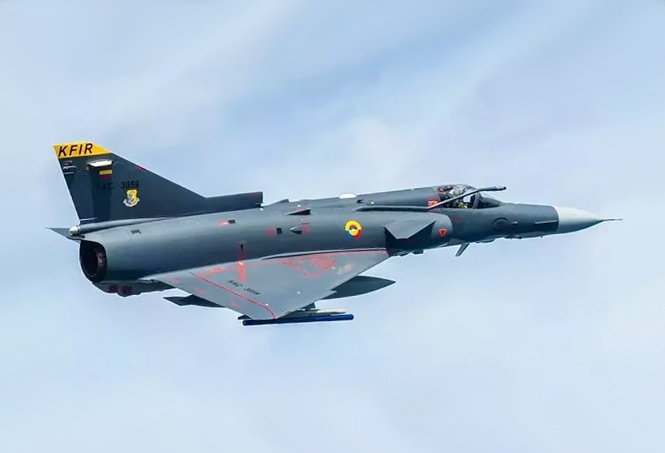
 en.m.wikipedia.org
The project that would ultimately give birth to the Kfir can be traced back to the IDF's need for adapting the Dassault Mirage IIIC to the specific requirements of the Israeli Air Force (IAF).
The all-weather, delta-winged Mirage IIICJ was the first Mach 2 aircraft acquired by Israel from then-close ally France, and constituted the backbone of the IAF during most of the 1960s, until the arrival of the Douglas A-4 Skyhawk and, most importantly, the McDonnell Douglas F-4 Phantom II, by the end of the decade. While the Mirage IIICJ proved to be extremely effective in the air-superiority role, its relatively short range imposed some limitations on its usefulness as a ground-attack aircraft.
Thus, in the mid-1960s, at the request of Israel, Dassault Aviation began developing the Mirage 5, a fair-weather, ground-attack version of the Mirage III. Following the suggestions made by the Israelis, advanced avionics located behind the cockpit were removed, allowing the aircraft to increase its fuel-carrying capacity while reducing maintenance costs.
By 1968, Dassault had finished production of the 50 Mirage 5Js paid for by Israel, but an arms embargo imposed upon Israel by the French government in 1967 prevented deliveries from taking place. The Israelis replied by producing an unlicensed copy of the Mirage 5, the Nesher, with technical specifications for both the airframe and the engine obtained by Israeli spies
France: ok but you are sanctioned
Jews: ok I send MOSSAD to steal the jet
The jet was promised to them 3000 years ago.
IAI Kfir - Wikipedia
The project that would ultimately give birth to the Kfir can be traced back to the IDF's need for adapting the Dassault Mirage IIIC to the specific requirements of the Israeli Air Force (IAF).
The all-weather, delta-winged Mirage IIICJ was the first Mach 2 aircraft acquired by Israel from then-close ally France, and constituted the backbone of the IAF during most of the 1960s, until the arrival of the Douglas A-4 Skyhawk and, most importantly, the McDonnell Douglas F-4 Phantom II, by the end of the decade. While the Mirage IIICJ proved to be extremely effective in the air-superiority role, its relatively short range imposed some limitations on its usefulness as a ground-attack aircraft.
Thus, in the mid-1960s, at the request of Israel, Dassault Aviation began developing the Mirage 5, a fair-weather, ground-attack version of the Mirage III. Following the suggestions made by the Israelis, advanced avionics located behind the cockpit were removed, allowing the aircraft to increase its fuel-carrying capacity while reducing maintenance costs.
By 1968, Dassault had finished production of the 50 Mirage 5Js paid for by Israel, but an arms embargo imposed upon Israel by the French government in 1967 prevented deliveries from taking place. The Israelis replied by producing an unlicensed copy of the Mirage 5, the Nesher, with technical specifications for both the airframe and the engine obtained by Israeli spies