?
| |
The truth liberates
★★★★★
- Joined
- Nov 11, 2025
- Posts
- 542
Greetings, all.
From what I have read on this forum, many confuse and falsely assert which factors contribute more to SMV. Although this may sound contradictory at first, two people pointing at two different factors can both be right in different situations, with most of the disagreement coming down to misunderstanding. Therefore, I have brought it upon myself to lay out a framework through which discussion of these factors is possible without pointless back-and-forth and name-calling. I will be using some ".org speak," but only because the 'tismmaxxers on there have defined many things which have taken on the names they use. I also take a lot of inspiration from RR.
I am first going to categorize the main factors into three categories: primary, secondary, and tertiary. Importance is up to down, left to right. They can either be qualifying factors (QF) or disqualifying factors (DQF). These are generally "be X" or "don't be below average X" respectively.
*Pheno here refers to ethnicity. It's hard to categorize this because it's both intertwined with many other hard set (face) and soft set (culture) factors. If being Germanic is correlated with better facial bones, is the credit given to the ethnicity or the face? If you took a 5'5 balding Indian and replaced all of his features with white ones to the point where he is indistinguishable from white, can you still even consider him Indian? JBW Ship of Theseus.
Essentially, the "higher up" a factor is, the more important it is. It is easier for more impactful factors to override a deficiency in a less impactful factor. However, as the quality of the more impactful factors decrease, it gets exponentially more difficult to compensate with the less impactful ones. i.e. you would have to be a neurotypical multi-millionaire with an acceptable penis in order to be able to overcome a 3/10 face and receive similar treatment to an 8/10 facial mogger. Even then, it would be artificial. If women don't even want to talk to you, you're deficient in primary factors. If they don't want to form relationships with you, you're deficient in secondary factors. If you're not getting past the friend-zone, your tertiary factors aren't enough to overcome your low primary and secondary factors.
That being said, how would you compare two factors? Will face always be more important than height? Not necessarily. This is where the QF and DQF comes into play. Each factor can be compared to another factor based on graphs of how important said factor is depending on some sample person's existing features. These graphs can be plotted with units of the factor on the x-axis** and importance*** on the y-axis.
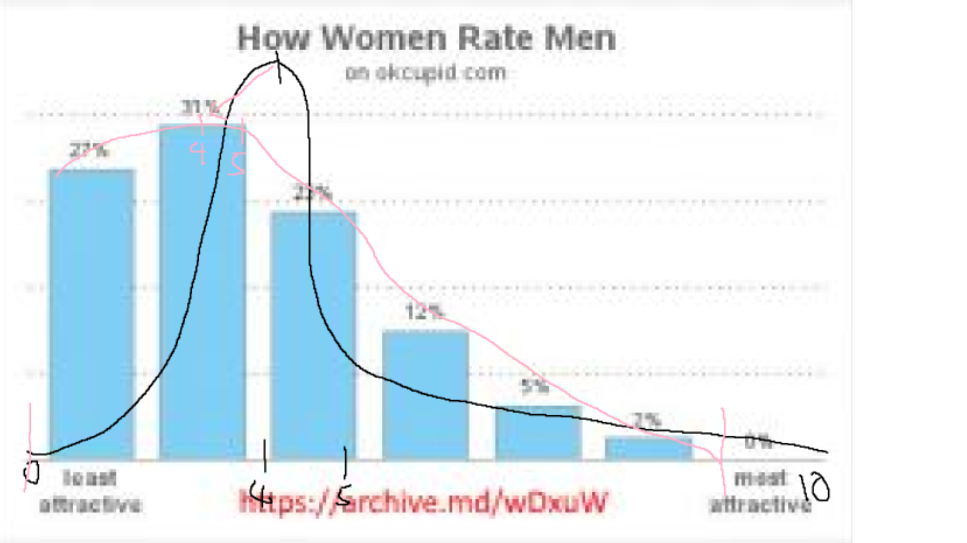
**For face, take the most optimal example, mark it as 10/10. Take the most sub-optimal, mark it as 0/10. Everyone falls in between depending on how close to optimal or doomed they are. The average and mean are probably around a 4.5 and 4 respectively.
***The units for this are arbitrary, it only matters relatively, not absolutely. The "importance" is measured by the question, "if I were to improve by one unit in this feature, how much of an impact would it have?"
Let's compare height and face, a hotly debated topic.
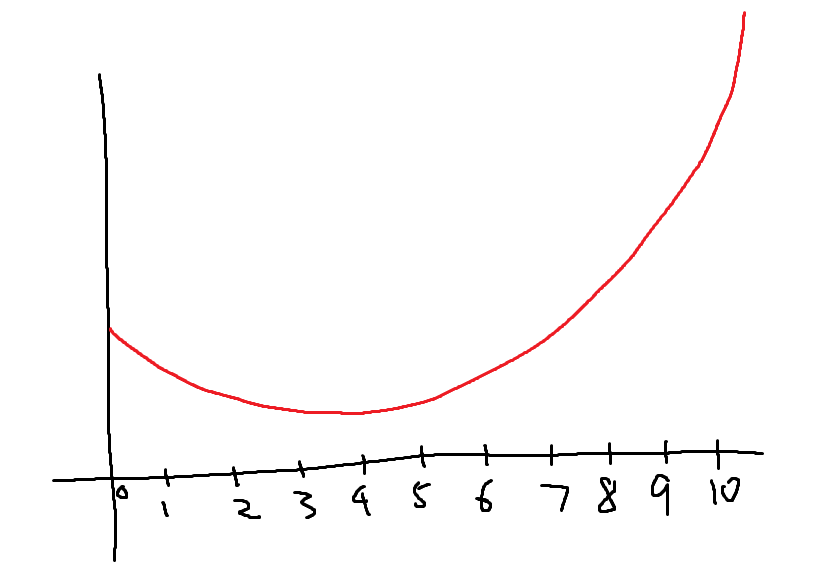
Face is most important at 0 (burn victim tier) and especially from 8-10 (model tier). Going from 0-2 is important because it actually lets you participate in society semi-normally and 8-10 is important because that’s when women actually look at you.
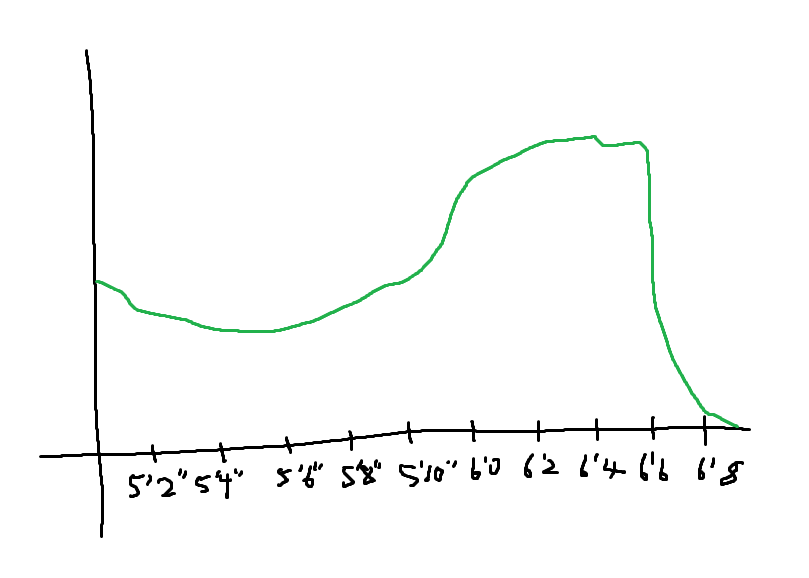
Height is most important from 5’10”-6’6”, and as 6’6” is optimal any increase past that is negligible at best.
I am in no way declaring these particular graphs as perfect (in fact I already see many issues with them), but please bear with me, they only exist to illustrate an idea.
Now, let's hypothesize. Let's say our example person is 6'0 but facially a 4/10. What would increase their SMV more?
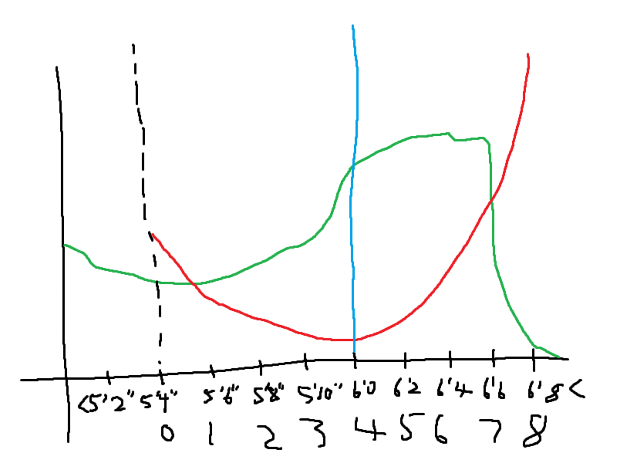
It appears that being 6'2” is going to affect his SMV more than going from a 4/10 → 5/10 facially. The caveat to this method is that the y-value must be dictated considering the units of other SMV factors for the overlapped graphs to be accurate in comparison the whole way through. Obviously, the more factors you add, the more difficult this becomes. I ensured accuracy by making sure the original graphs of the two factors contained the same number of total units. I managed this with height by considering less than 5'2” and more than 6'8” as single units, which is plausible because of a low rate of occurrence. You could also scale two functions based on where you believe they should intersect, but this could get messy with the units. Another way these comparisons can be made is going by each point one by one and asking whether one factor is more important than another and by how much.
The integrals of these graphs would also theoretically more or less map onto the pure SMV value of the factor at x. i.e., the y at any given x on the graph made using the aforementioned method is how fast the SMV value of the factor shown is increasing at that point.
I don't mean to say that what I've proposed here is spot-on, and I invite suggestions, but it should provide a general methodology for discussion. It is pointless to discuss SMV factors such as height, face, etc. in a vacuum where very real variables are often ignored.
IQcel copers who are doomed by one trait DNR with cope; you would most likely not be able to slay if you were average in that trait anyways.
From what I have read on this forum, many confuse and falsely assert which factors contribute more to SMV. Although this may sound contradictory at first, two people pointing at two different factors can both be right in different situations, with most of the disagreement coming down to misunderstanding. Therefore, I have brought it upon myself to lay out a framework through which discussion of these factors is possible without pointless back-and-forth and name-calling. I will be using some ".org speak," but only because the 'tismmaxxers on there have defined many things which have taken on the names they use. I also take a lot of inspiration from RR.
I am first going to categorize the main factors into three categories: primary, secondary, and tertiary. Importance is up to down, left to right. They can either be qualifying factors (QF) or disqualifying factors (DQF). These are generally "be X" or "don't be below average X" respectively.
Primary - required for immediate contact, judged in 13ms.
Face (Ratios | Features, Bones) (QF), Height (DQF), Pheno* (QF)
Secondary - required for intermediate contact, essentially ascension.
Neurotypicality (DQF), Penis (DQF), Body (DQF)
Tertiary - beneficial for long term contact.
Money (QF), Status (DQF)
Face (Ratios | Features, Bones) (QF), Height (DQF), Pheno* (QF)
Secondary - required for intermediate contact, essentially ascension.
Neurotypicality (DQF), Penis (DQF), Body (DQF)
Tertiary - beneficial for long term contact.
Money (QF), Status (DQF)
*Pheno here refers to ethnicity. It's hard to categorize this because it's both intertwined with many other hard set (face) and soft set (culture) factors. If being Germanic is correlated with better facial bones, is the credit given to the ethnicity or the face? If you took a 5'5 balding Indian and replaced all of his features with white ones to the point where he is indistinguishable from white, can you still even consider him Indian? JBW Ship of Theseus.
Essentially, the "higher up" a factor is, the more important it is. It is easier for more impactful factors to override a deficiency in a less impactful factor. However, as the quality of the more impactful factors decrease, it gets exponentially more difficult to compensate with the less impactful ones. i.e. you would have to be a neurotypical multi-millionaire with an acceptable penis in order to be able to overcome a 3/10 face and receive similar treatment to an 8/10 facial mogger. Even then, it would be artificial. If women don't even want to talk to you, you're deficient in primary factors. If they don't want to form relationships with you, you're deficient in secondary factors. If you're not getting past the friend-zone, your tertiary factors aren't enough to overcome your low primary and secondary factors.
That being said, how would you compare two factors? Will face always be more important than height? Not necessarily. This is where the QF and DQF comes into play. Each factor can be compared to another factor based on graphs of how important said factor is depending on some sample person's existing features. These graphs can be plotted with units of the factor on the x-axis** and importance*** on the y-axis.
**For face, take the most optimal example, mark it as 10/10. Take the most sub-optimal, mark it as 0/10. Everyone falls in between depending on how close to optimal or doomed they are. The average and mean are probably around a 4.5 and 4 respectively.
***The units for this are arbitrary, it only matters relatively, not absolutely. The "importance" is measured by the question, "if I were to improve by one unit in this feature, how much of an impact would it have?"
Let's compare height and face, a hotly debated topic.
Face is most important at 0 (burn victim tier) and especially from 8-10 (model tier). Going from 0-2 is important because it actually lets you participate in society semi-normally and 8-10 is important because that’s when women actually look at you.
Height is most important from 5’10”-6’6”, and as 6’6” is optimal any increase past that is negligible at best.
I am in no way declaring these particular graphs as perfect (in fact I already see many issues with them), but please bear with me, they only exist to illustrate an idea.
Now, let's hypothesize. Let's say our example person is 6'0 but facially a 4/10. What would increase their SMV more?
It appears that being 6'2” is going to affect his SMV more than going from a 4/10 → 5/10 facially. The caveat to this method is that the y-value must be dictated considering the units of other SMV factors for the overlapped graphs to be accurate in comparison the whole way through. Obviously, the more factors you add, the more difficult this becomes. I ensured accuracy by making sure the original graphs of the two factors contained the same number of total units. I managed this with height by considering less than 5'2” and more than 6'8” as single units, which is plausible because of a low rate of occurrence. You could also scale two functions based on where you believe they should intersect, but this could get messy with the units. Another way these comparisons can be made is going by each point one by one and asking whether one factor is more important than another and by how much.
The integrals of these graphs would also theoretically more or less map onto the pure SMV value of the factor at x. i.e., the y at any given x on the graph made using the aforementioned method is how fast the SMV value of the factor shown is increasing at that point.
I don't mean to say that what I've proposed here is spot-on, and I invite suggestions, but it should provide a general methodology for discussion. It is pointless to discuss SMV factors such as height, face, etc. in a vacuum where very real variables are often ignored.
IQcel copers who are doomed by one trait DNR with cope; you would most likely not be able to slay if you were average in that trait anyways.